
Ceramic Coating in Singapore: How to Choose the Right Package
Choosing a ceramic coating package should not feel like decoding a workshop menu. Yet for many car owners in Singapore, the options can look confusing: one layer, two layers, four layers, 9H hardness, graphene, warranty claims, add-ons, paint correction, maintenance wash and more.
The right choice is not always the most expensive package. It is the package that matches your car’s paint condition, where you park, how often you drive and how long you plan to keep the vehicle. A weekend car kept under shelter does not need the same approach as a daily driver parked in an open HDB carpark under sun, rain, tree sap and bird droppings.
This guide explains how to compare ceramic coating in Singapore without getting distracted by marketing terms. By the end, you should know what to ask, what to prioritise and when it makes sense to upgrade.
Start with what you want the coating to do
Before comparing packages, decide what problem you are trying to solve. Ceramic coating is not a magic shield that makes paint indestructible. It is a cured protective layer that bonds to the paint surface, improving gloss, water repellency, ease of washing and resistance against certain contaminants.
For most Singapore car owners, the main goals are practical:
Keep the car looking glossy for longer
Make weekly washing easier
Reduce staining from bird droppings, rain marks and road grime
Add UV and weathering protection
Improve resistance against light wash marks
Preserve the appearance of a new or freshly polished car
If you are still weighing whether the treatment is worth it, this overview of ceramic coating benefits for Singapore car owners explains the day-to-day value in more detail.
Once your goal is clear, it becomes easier to filter packages. A new car owner may prioritise long-term paint preservation. A used car owner may need more paint correction before coating. An enthusiast with a black or dark-coloured car may care more about gloss depth and swirl reduction.
What is usually included in a ceramic coating package?
A ceramic coating package is not just the liquid coating itself. Much of the result depends on preparation. Good prep helps the coating bond properly and makes the final finish look cleaner, glossier and more even.
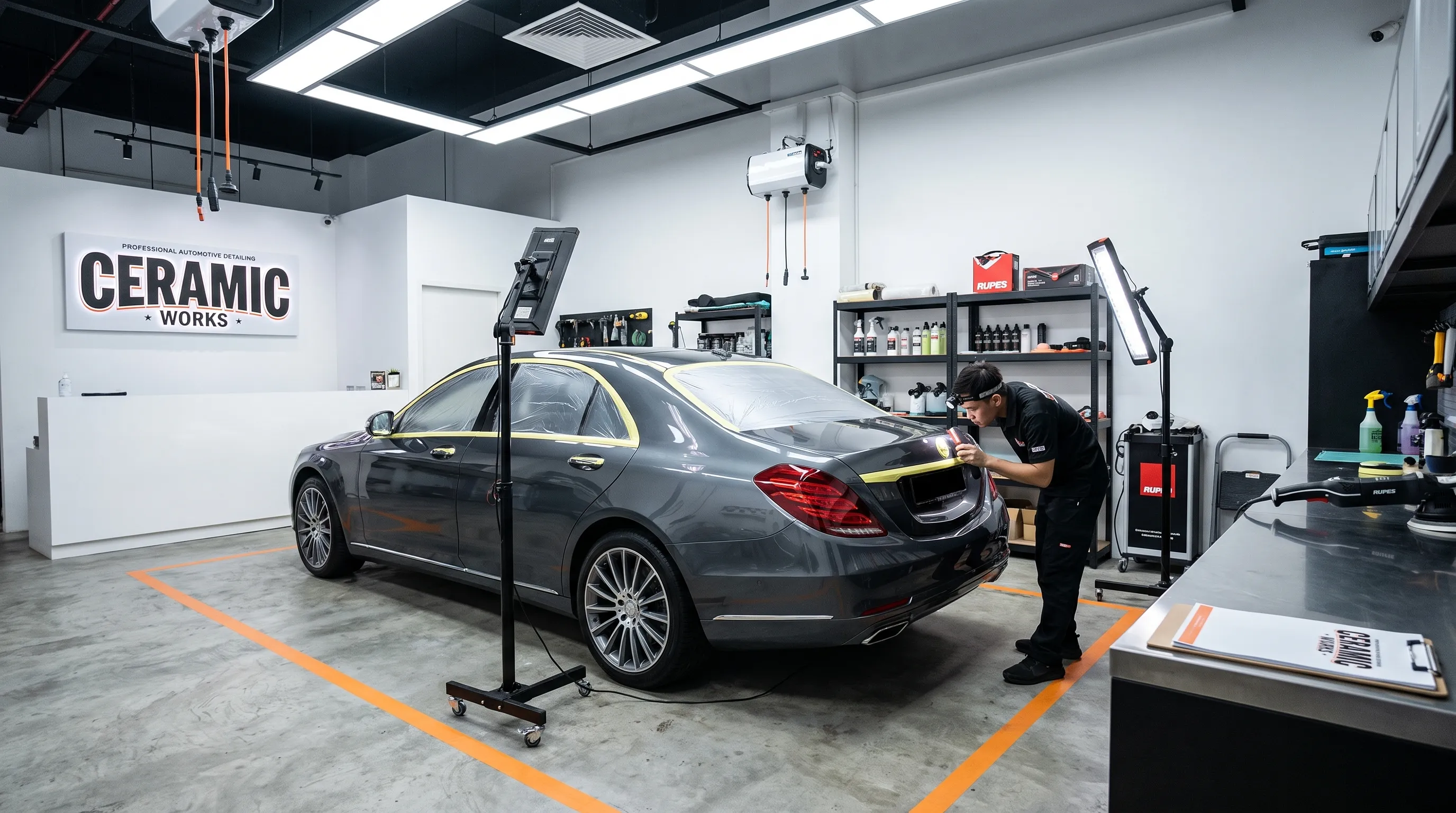
A typical professional package may involve inspection, washing, decontamination, polishing or paint correction, panel wipe-down, ceramic coating application and curing time. Some packages also include additional coated areas such as rims, glass, headlights or interior surfaces, depending on the workshop and the selected package.
Here is a simple way to understand the main package differences:
| Package type | Best for | What to check before choosing |
|---|---|---|
| Entry-level coating | Newer cars in good condition, owners who want easier washing | Whether proper decontamination and light polishing are included |
| Mid-range coating | Daily drivers, cars exposed to outdoor parking, owners wanting stronger gloss and protection | Paint correction level, coating layers and aftercare guidance |
| Premium multi-layer coating | Enthusiasts, luxury cars, dark-coloured cars, owners keeping the car long-term | Depth of correction, curing process, coated areas and warranty terms |
| PPF plus coating | Cars with high stone-chip risk, expressway-heavy use, performance cars | Which panels receive paint protection film and whether coating is applied over compatible areas |
The names vary by workshop, so do not compare packages by label alone. Compare what is done to the car.
In Singapore, your parking and driving routine matter
Singapore’s climate is one reason ceramic coating is popular here. The combination of strong sun, humidity, sudden rain, urban dust and tight parking environments is tough on paintwork.
A car parked mostly under shelter at home and work may do well with a simpler coating package if the owner washes it regularly. A car parked outdoors near trees, construction areas or industrial zones will need stronger protection and more disciplined maintenance. If your car sits outdoors most days, contaminants can bake onto the surface quickly, especially on the bonnet, roof and boot.
Driving pattern matters too. Expressway use exposes the front bumper, bonnet and side mirrors to higher impact from road debris. Ceramic coating helps with chemical resistance and ease of cleaning, but it does not provide the same impact absorption as paint protection film. If stone chips are your main concern, consider combining PPF on high-impact panels with ceramic coating on the rest of the car.
This is where a proper consultation helps. The best detailers ask how you use the car before recommending a package. That same fit-first mindset is visible in home design too: when shoppers choose customisable designer lighting, they look at ceiling height, room layout and finish instead of buying only by appearance. Ceramic coating packages deserve the same logic, because fit matters more than a flashy name.
Match the package to your car’s current paint condition
The biggest mistake is assuming a ceramic coating will hide every defect. It will not. In many cases, coating can make defects more noticeable because the surface becomes glossier and reflections become sharper.
For a brand-new car, the paint may still have light transport marks, dealership wash marks or water spots. A new car coating package should still include proper inspection and surface preparation, not just a quick wash and application.
For a used car, paint correction becomes more important. If the car has swirl marks, oxidation, dull patches or previous polishing residue, the workshop may need more time to refine the surface before coating. This can affect the recommended package and final price.
Dark colours such as black, navy, deep red and metallic grey deserve extra attention. They show water spots and wash marks more easily than silver or white. If you own a dark car and care about finish quality, a package with better correction and careful aftercare guidance is usually worth considering.
Do not choose by number of layers alone
Layer count gets a lot of attention, but it should not be the only deciding factor. More layers may improve durability, gloss or coverage when applied correctly, but poor preparation will still lead to disappointing results.
A well-prepared two-layer coating can look and perform better than a rushed multi-layer job. The coating needs a clean, corrected surface to bond to. If contaminants, oils or polishing residue are left behind, the coating may not cure evenly or last as expected.
When comparing ceramic coating packages, ask how the workshop handles these steps:
Paint inspection under proper lighting
Chemical and mechanical decontamination
Polishing or paint correction level
Panel wipe-down before coating
Controlled curing time
Maintenance instructions after collection
This is also why quotes can vary widely. You may not be comparing the same amount of labour, correction or coating coverage. If price is your main concern, it helps to understand what affects ceramic coating prices in Singapore before deciding.
Understand the role of 9H and scratch resistance
Many ceramic coatings mention 9H hardness. It sounds reassuring, but car owners should understand what it means in real life. A ceramic coating can improve resistance against light wash marks and fine abrasions, especially compared with unprotected paint. It does not make the car scratch-proof.
Keys, careless door contact, abrasive towels, dirty sponges and automatic car washes can still mark the surface. The coating is best seen as a sacrificial protective layer that reduces risk and makes proper maintenance easier.
If your priority is preventing deeper scratches or stone chips, ask about paint protection film. PPF is a physical film designed to absorb more impact than a ceramic coating. Many owners use both: PPF for high-risk panels and ceramic coating for gloss, hydrophobic performance and easier cleaning.
Consider coating add-ons only if they solve a real problem
Add-ons can be useful, but they should not be automatic. The right add-ons depend on how you drive and maintain the car.
| Add-on | When it makes sense | What it helps with |
|---|---|---|
| Rim coating | Brake dust builds up quickly or you wash the car yourself | Easier wheel cleaning and reduced grime bonding |
| Glass coating | You drive often in heavy rain | Better water beading and improved visibility when maintained properly |
| Interior coating | You have children, pets or light-coloured upholstery | Easier cleanup of minor spills and dirt |
| PPF | You drive expressways often or own a performance or luxury car | Better defence against chips and physical impact |
| Solar film | Cabin heat and UV exposure are major concerns | Improved comfort and interior protection, depending on film type |
The key is to avoid paying for areas you do not need while neglecting areas that matter. For example, an owner who parks outdoors daily may benefit more from strong exterior paint preparation than from a long list of cosmetic add-ons.
Ask about warranty, but read the conditions
A long warranty can be attractive, but the details matter more than the headline duration. Ceramic coating performance depends on application quality and maintenance. Most warranties require proper washing, avoidance of harsh chemicals and sometimes periodic inspections or maintenance.
Before choosing a package, ask what the warranty actually covers. Does it cover loss of gloss, coating failure, water beading reduction or only application defects? Are water spots, bird dropping etching and improper washing excluded? What proof of maintenance is required?
A transparent workshop will explain these points clearly. Be cautious if the sales pitch focuses only on years of protection without discussing maintenance responsibilities.
Compare workshops by process, not just price
A good ceramic coating installer should be able to explain what they will do to your specific car. If the recommendation sounds generic, ask for more detail.
Useful questions include:
What is the current condition of my paintwork?
How much polishing or correction is included?
Which coating system will be used?
How many layers are applied and to which areas?
How long does the job take?
What should I avoid after collection?
How should I wash the car after coating?
What is covered under warranty?
Ceramic Works specialises in KubeBond nano ceramic coating in Singapore, with applications carried out by trained detailers. KubeBond is known for nano ceramic paint protection with hydrophobic performance, gloss enhancement and international certification credentials including SGS and REACH. If those factors matter to you, ask how the chosen package uses the coating system and what level of preparation is included.
A practical selection guide for common car owners
If you are still unsure which package to choose, use your ownership profile as a starting point.
A new car owner who plans to keep the car for several years should focus on early protection. The paint is still relatively fresh, so the package should preserve the finish before heavy wash marks and contamination build up. Proper prep still matters, even if the car just left the showroom.
A daily driver parked outdoors should prioritise durability, hydrophobic performance and easy maintenance. The car will face more rain, heat, dust and contaminants, so a mid-range or premium package may make more sense than the most basic option.
A dark-coloured car owner should pay closer attention to paint correction. Swirls and water spots show easily on dark paint, so the finish before coating is critical.
A COE-renewed or used car owner should ask for a paint inspection before committing. Older paint may need deeper correction, but overly aggressive polishing is not always ideal if clear coat thickness is limited. The workshop should balance improvement with paint preservation.
An enthusiast or luxury car owner may consider a more comprehensive package with multi-layer coating, selective PPF and add-ons for rims or glass. This is less about vanity and more about matching the level of protection to the value and usage of the vehicle.
What to do after the coating is applied
Choosing the right package is only half the job. Maintenance determines how well the coating performs over time.
Avoid washing the car too soon after application unless the detailer says it is safe. Once the coating has cured, wash with a suitable car shampoo, clean mitts and proper drying towels. Do not use abrasive sponges or harsh household detergents. If bird droppings or tree sap land on the paint, remove them as soon as possible, even with coating.
Hydrophobic behaviour can also be affected by dirt buildup. If water beading seems weaker, the surface may simply need a proper wash or decontamination rather than a new coating. Good aftercare keeps the coating slick, glossy and easier to clean.
Frequently Asked Questions
How much should I spend on ceramic coating in Singapore? The right budget depends on your car size, paint condition, coating system, number of layers and preparation work. Instead of choosing by price alone, compare what each package includes and whether paint correction is part of the process.
Is a higher-layer ceramic coating always better? Not always. More layers can be useful when applied correctly, but surface preparation, curing and maintenance are just as important. A carefully prepared lower-layer package can outperform a rushed higher-layer package.
Should I coat a brand-new car immediately? It is often a good idea to protect a new car early, but the paint should still be inspected and prepared before coating. New cars can have light marks, water spots or dealership wash defects.
Can ceramic coating prevent scratches? Ceramic coating improves resistance against light wash marks and minor abrasions, but it does not make paint scratch-proof. For stronger protection against chips and physical impact, consider paint protection film for selected panels.
How long does ceramic coating last in Singapore? Longevity depends on the coating system, preparation quality, parking conditions, washing method and maintenance. Outdoor parking, harsh washing and delayed removal of contaminants can reduce performance.
Do I still need to wash my car after ceramic coating? Yes. Ceramic coating makes washing easier, but it does not eliminate maintenance. Regular gentle washing helps preserve gloss, slickness and water beading.
Choose the package that fits your car, not just the brochure
The best ceramic coating package is the one that matches your real driving life in Singapore. Look beyond layer count and warranty claims. Focus on paint preparation, coating quality, installer experience, aftercare and whether the package solves the problems your car actually faces.
If you want professional guidance, request a free quote from Ceramic Works and share how you use, park and maintain your car. A proper recommendation starts with your vehicle, not a one-size-fits-all package.