
How to Choose Solar Window Film For Cars in Singapore
How To Choose Solar Window Film For Cars in Singapore
Driving in Singapore means dealing with intense sunlight, high humidity and warm temperatures throughout the year. Even with your car's air conditioning running, heat entering through the windows can make the cabin uncomfortable, especially after parking outdoors for several hours.
Installing solar window film for cars can help reduce heat buildup, block harmful ultraviolet (UV) rays and improve driving comfort. However, with different tinting technologies, specifications and price ranges available, choosing the right film requires more than comparing how dark each option looks.
You also need to consider heat rejection performance, visibility, durability and compliance with Singapore's Land Transport Authority (LTA) regulations. This guide explains what to look for when selecting car solar film in Singapore, including the technical specifications that matter and common mistakes to avoid.
What Is Solar Window Film For Cars?
Solar window film is a thin, multi-layered material applied to the interior surface of a vehicle's glass. It is designed to control the amount of solar energy entering the cabin while maintaining sufficient visibility for safe driving.
Depending on the technology used, automotive window films can reject infrared radiation, block ultraviolet rays and reduce visible glare. Some products also offer additional benefits such as improved privacy and reduced fading of interior materials.
How Does Car Solar Film Work?
Sunlight contains ultraviolet radiation, visible light and infrared radiation, all of which contribute differently to the driving experience. Infrared radiation is associated with the warming effect of sunlight, while visible light also carries energy that can heat the cabin.
High-quality solar films use specialised coatings and materials to absorb or reflect portions of this solar energy. Their effectiveness depends on the film's construction, glass characteristics and the amount of sunlight reaching the vehicle.
1. Check The Solar Film's Heat Rejection Performance
One of the main reasons Singapore drivers install solar window film is to reduce the heat entering their vehicles. However, manufacturers use several performance measurements, and understanding their differences can help you make a more informed purchase.
Total Solar Energy Rejected (TSER)
Total Solar Energy Rejected (TSER) measures the percentage of total solar energy prevented from passing through the glass and film combination. It accounts for solar energy across the ultraviolet, visible and infrared portions of the spectrum.
For example, a film with a TSER rating of 60% rejects approximately 60% of the total solar energy under the stated test conditions. Higher TSER values generally indicate stronger overall solar heat rejection, provided the ratings are measured using comparable methods.
When comparing products, ask installers for the TSER rating rather than relying entirely on advertised infrared rejection percentages.
Infrared Rejection (IRR)
Infrared Rejection (IRR) measures how effectively a film rejects infrared radiation. Since infrared radiation contributes significantly to the sensation of radiant heat, this specification frequently appears in solar film advertisements.
You may encounter products claiming infrared rejection of 90%, 95% or even 99%. These figures can be useful, but they do not necessarily represent the film's total heat rejection performance.
Some manufacturers measure infrared rejection at a specific wavelength rather than across the broader infrared spectrum. Always check the testing method and compare TSER ratings alongside IRR values.
Ultraviolet Rejection (UVR)
Ultraviolet Rejection (UVR) refers to the percentage of ultraviolet radiation blocked by the window film. Many quality automotive films advertise UV rejection rates of 99% or higher.
Effective UV protection helps reduce exposure to harmful ultraviolet radiation and can slow the fading of car seats, dashboards and other interior materials.
However, UV protection and heat rejection are separate performance characteristics. A film can provide excellent UV protection while offering relatively modest heat reduction.
2. Make Sure The Solar Window Film Complies With LTA Regulations
Before choosing solar window film for cars in Singapore, you must understand the legal requirements governing vehicle window tinting.
The Land Transport Authority (LTA) regulates how much visible light must pass through vehicle windows. Installing excessively dark films may result in non-compliance during vehicle inspections or enforcement checks.
What Are The Legal Window Tint Limits In Singapore?
Under LTA's vehicle window tinting requirements, the minimum Visible Light Transmission (VLT) levels are:
| Vehicle Window | Minimum VLT Requirement |
|---|---|
| Front windscreen | 70% |
| Front side windows | 70% |
| Rear windscreen | 25% |
| Rear side windows | 25% |
Is Tint Percentage The Same As VLT?
Window tint percentages can be confusing because some product descriptions refer to the film's darkness, while others specify Visible Light Transmission (VLT). A higher VLT allows more visible light to pass through, while a lower VLT produces a darker appearance.
For example, a film with 70% VLT allows 70% of visible light to pass through, while a film described as 70% dark may indicate something different. Always check the actual VLT specification, as LTA requirements apply to the combined glass and solar film, rather than the film alone.
Why Factory-Tinted Glass Matters
Many modern vehicles already have factory-tinted glass, meaning the windows naturally transmit less than 100% of visible light. Adding a solar film reduces the overall light transmission further.
For example, suppose your existing window glass has a VLT of 80%, and you install a film rated at 80% VLT. The combined VLT would be approximately 64%, assuming a simplified multiplication of the two ratings.
That could place a front window below Singapore's minimum 70% requirement.
A reputable installer should measure the existing glass before recommending a suitable film. You should also request a final VLT measurement after installation to confirm compliance.
LTA requirements may change, so verify the applicable standards with LTA before installation.
3. Compare The Different Types Of Car Solar Window Film
Automotive solar films use different technologies, each offering distinct advantages in terms of heat rejection, appearance, signal compatibility and price.
Understanding these differences can help you avoid paying more for features that do not suit your driving habits.
Dyed Solar Window Film
Dyed window films contain colouring agents that absorb portions of incoming sunlight. They are generally among the more affordable automotive tinting options.
Their main advantages are reduced glare, darker window appearance and improved privacy. However, their heat rejection performance is often lower than that of advanced ceramic or high-performance films.
Lower-quality dyed films may also fade, discolour or deteriorate after prolonged exposure to sunlight.
Metallised Solar Window Film
Metallised films incorporate thin metallic layers that reflect solar radiation. They can provide good heat rejection and are often more durable than basic dyed films.
However, certain metallised products may interfere with radio frequency signals used by GPS devices, mobile connectivity or electronic systems. The extent of interference depends on the film's composition and the vehicle's equipment.
If your vehicle relies heavily on wireless connectivity, ask the installer about signal compatibility before selecting a metallised film.
Ceramic Solar Window Film
Ceramic window films use non-metallic ceramic particles or coatings to manage solar energy. They are popular among drivers seeking effective heat rejection without the potential signal interference associated with some metallic films.
Good ceramic films can maintain high visible light transmission while providing substantial heat reduction. This makes them particularly useful for Singapore drivers who want strong daytime comfort while remaining within LTA tinting limits.
However, ceramic films vary considerably in quality and performance. A product labelled "ceramic" is not automatically superior to every other type of solar film.
Nano-Ceramic Solar Window Film
Nano-ceramic films incorporate very small ceramic particles within specialised film layers. Depending on the product, this technology can improve optical clarity, infrared rejection and overall solar performance.
Higher-end nano-ceramic films often command a higher price because of their materials and manufacturing processes. Still, buyers should evaluate independently tested specifications rather than treating the nano-ceramic label as a guarantee of performance.
4. Consider Your Driving Habits And Parking Conditions
The right solar window film also depends on how frequently you drive, where you park and which windows receive the most sunlight.
A car parked outdoors for eight hours every weekday faces different conditions from a vehicle kept mainly in a sheltered basement.
For Drivers Who Frequently Park Outdoors
If your car is regularly exposed to direct sunlight, prioritise films with strong total solar energy rejection. This can help reduce solar heat entering the cabin and may make the vehicle more comfortable once you begin driving.
However, solar film cannot completely prevent a parked car from heating up. Heat also enters through the vehicle's body, and cabin temperatures can still rise significantly during prolonged exposure.
For Drivers Who Travel Long Distances
Drivers who spend extended periods on expressways may benefit from films that reduce glare and radiant heat. Consistent sunlight through the side windows can become uncomfortable during longer journeys.
Choose a film that balances effective heat rejection with clear outward visibility. Excessive tinting can affect your ability to see surrounding vehicles, pedestrians and road conditions, particularly at night.
For Families With Young Children
Parents may prioritise UV protection and improved rear-seat comfort when selecting solar window films. Children sitting near side windows can experience prolonged sunlight exposure during daily journeys.
Consider a film offering strong UV rejection, suitable heat control and compliant light transmission. Solar film provides additional protection, but it does not replace appropriate sun protection for extended exposure.
5. Understand Solar Film Tint Darkness And Visibility
The darkness of your solar window film affects your car's appearance, privacy and outward visibility. However, a darker film does not automatically provide better heat rejection, as modern ceramic films can deliver strong solar protection while maintaining a lighter appearance.
When choosing solar window film for cars, consider how different tint levels look on your vehicle and how they affect visibility during daytime and nighttime driving.
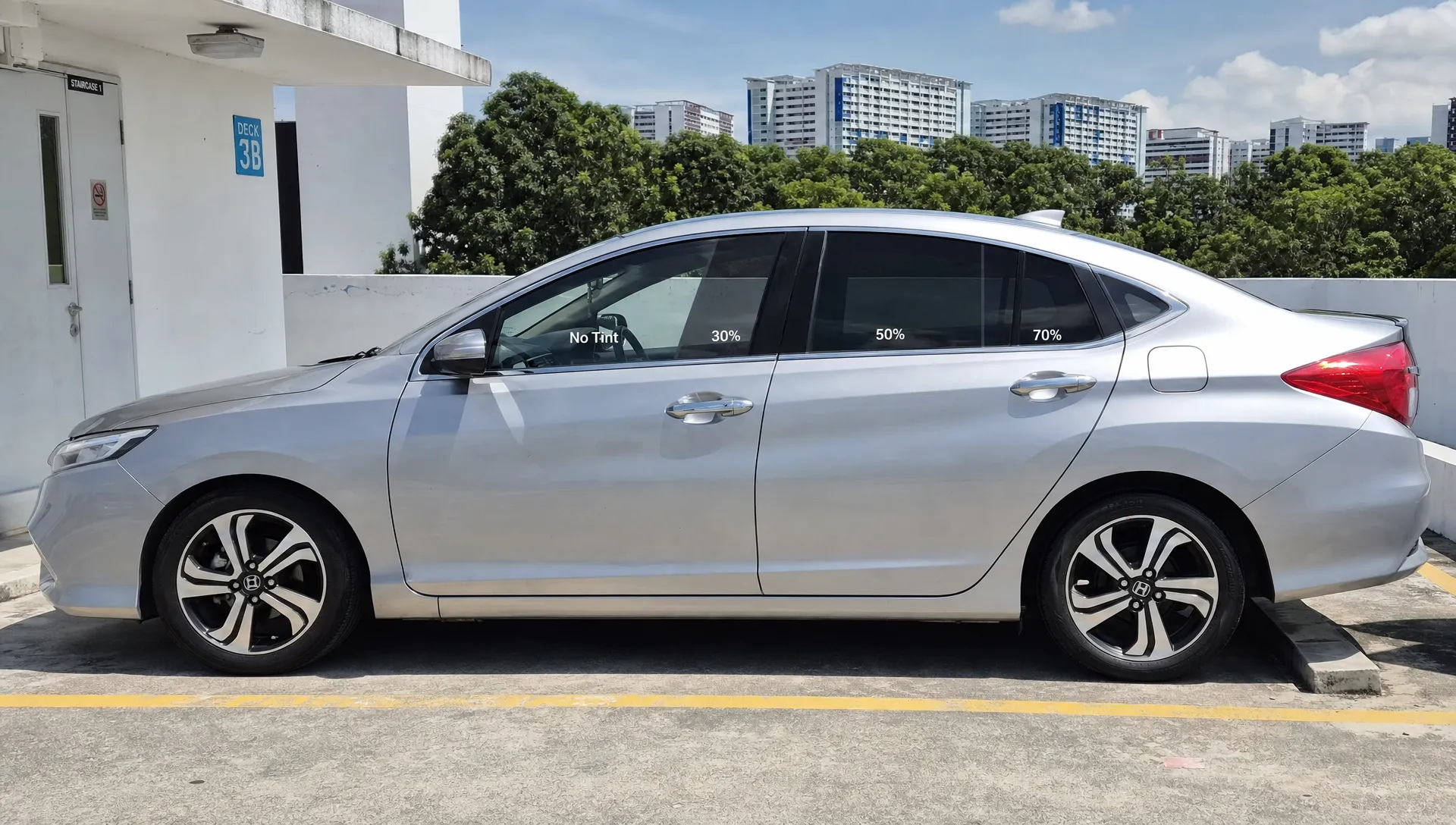
How Different Window Tint Levels Affect Your Car
As shown in the image, different tint levels can significantly change the appearance of your vehicle's windows. Darker options create a more shaded appearance and greater daytime privacy, while lighter films maintain a clearer view through the glass.
However, tint darkness should be evaluated alongside the film's VLT and heat rejection specifications. Two films with a similar appearance may offer significantly different levels of solar protection.
Does Darker Solar Film Provide Better Heat Rejection?
Not necessarily. High-performance ceramic and nano-ceramic films can provide effective infrared and solar heat rejection without requiring excessively dark tinting.
For Singapore drivers, this is particularly important because the front windscreen and front side windows must meet LTA's minimum 70% VLT requirement. Always compare the Total Solar Energy Rejected (TSER) rating and confirm the final VLT before installation.
Consider Visibility During Night Driving
While darker films can improve daytime privacy, they may reduce visibility when driving through poorly lit roads, basement carparks or residential areas at night. This can make it more difficult to identify pedestrians, obstacles and approaching vehicles.
Choose a tint level that maintains comfortable visibility in different lighting conditions. A professional installer should be able to explain the available options and recommend a suitable film for your driving habits.
6. Compare Solar Window Film Prices In Singapore
The cost of installing solar window film for cars in Singapore depends on several factors, including the vehicle's size, film technology, brand and installation complexity.
A compact hatchback generally requires less film than a large SUV or MPV. Vehicles with panoramic roofs, complex rear windscreens or additional glass panels may also incur higher installation charges.
When comparing quotations, pay attention to what is included in the package.
Check whether the stated price covers all side windows, the front windscreen and the rear windscreen. Also confirm whether existing film removal, additional roof glass and applicable taxes are included.
A lower upfront price may seem attractive, but poor durability or installation defects can result in additional costs later. Focus on the film's verified specifications, installation workmanship and warranty coverage.
7. Check The Warranty And Installation Quality
Even a technically impressive solar film can perform poorly if the installation is rushed or the glass is improperly prepared.
Professional installation requires thorough glass cleaning, accurate cutting and careful application to minimise contamination, creases and trapped air.
What Should A Solar Film Warranty Cover?
Before making a purchase, review the warranty terms for common film defects such as:
Bubbling or peeling under normal usage
Premature discolouration or fading
Cracking or adhesive deterioration
Manufacturing defects affecting visibility
Coverage for replacement labour and materials
Some warranties exclude damage caused by improper cleaning, physical scratches or unauthorised modifications. Ask whether the warranty is issued by the manufacturer, distributor or installation company.
Inspect The Finished Installation
After installation, examine the film edges, window corners and areas surrounding the demister lines. Check for visible contamination, unusual creases or significant alignment problems.
Minor moisture pockets or a slightly hazy appearance may occur during the initial curing period. Follow the installer's advice on when to lower your windows, clean the glass and assess the finished result.
8. Ask These Questions Before Choosing A Solar Film Installer
A reliable installer should be able to explain the product specifications clearly and recommend suitable options for your vehicle.
Before committing, ask the following questions:
What are the film's TSER, IRR, UVR and VLT ratings? Request a specification sheet that identifies the testing method.
Will the completed installation comply with LTA requirements? Confirm that your existing glass will be measured and the final VLT checked.
What type of film technology is used? Understand whether the product is dyed, metallised, ceramic or nano-ceramic.
Are all windows included in the quotation? Clarify coverage for windscreens, side windows and panoramic roofs.
What does the warranty cover? Check the duration, exclusions and replacement procedure.
Clear answers to these questions will make it easier to compare installers based on measurable quality rather than promotional claims.
Common Mistakes To Avoid When Buying Car Solar Film
Several purchasing mistakes can leave drivers disappointed even after spending considerable money on window tinting.
One common mistake is choosing a film solely because it advertises 99% infrared rejection. Without understanding the measurement conditions and overall TSER rating, that figure may give an incomplete picture of real-world heat reduction.
Another mistake is selecting the darkest available film without checking LTA compliance. Darker windows may improve privacy, but excessive tinting can compromise visibility and violate Singapore's requirements.
Finally, some drivers focus entirely on the film brand while overlooking installation workmanship. Careless installation can produce bubbles, uneven edges and visible contamination, regardless of how expensive the material is.
FAQs About Solar Window Film For Cars In Singapore
1. Does Solar Window Film Really Keep Cars Cooler In Singapore?
Yes, quality solar window films can reduce the amount of solar energy passing through vehicle windows, helping to improve cabin comfort during sunny conditions. However, the actual temperature difference depends on the film's performance, surrounding weather, parking duration and vehicle design.
A parked vehicle can still become very hot even with high-performance solar film installed. Adequate ventilation and responsible heat precautions remain important, particularly when travelling with children or pets.
2. How Long Does Car Solar Window Film Last?
The lifespan of automotive solar film depends on material quality, installation workmanship, environmental exposure and maintenance. Good-quality products may last for many years, while lower-grade films can develop fading, bubbling or adhesive problems earlier.
Review the manufacturer's warranty and follow the recommended cleaning instructions to maintain the film. Avoid abrasive materials or harsh cleaning chemicals that could damage the coated surface.
3. Can I Install Dark Solar Window Film On My Rear Windows In Singapore?
Yes, rear windscreens and rear side windows in Singapore generally have a minimum VLT requirement of 25%, allowing darker tinting than the front windows. However, the final light transmission must account for both the original glass and the installed film.
You should also consider visibility when reversing or driving at night. A professional installer can recommend a suitable film and measure the finished window to help confirm compliance.
Choosing The Right Solar Window Film For Your Car
The best solar window film for cars in Singapore should provide effective heat rejection, reliable UV protection, clear visibility and long-term durability.
Start by comparing TSER ratings and understanding the differences between ceramic, metallised and dyed films. Then consider your driving habits, verify LTA compliance and choose an installer who provides transparent specifications and warranty terms.
With the right combination of film technology and professional installation, you can enjoy a more comfortable driving experience while protecting your vehicle's interior from prolonged sun exposure.