
KubeBond PPF vs Liquid PPF: Which Is Better for Your Car?
KubeBond PPF vs Liquid PPF: Which Is Better for Your Car?
Protecting your car's paintwork is essential, especially in Singapore, where intense sunlight, frequent rain, road debris and tight parking spaces can take a toll on your vehicle's appearance.
While ceramic coatings and conventional Paint Protection Films (PPF) have long been popular choices, liquid PPF has also attracted attention as an alternative paint protection solution.
But how does liquid PPF compare with advanced film-based products such as KubeBond PPF? More importantly, which offers better protection against scratches, stone chips and everyday wear?
If you're considering Paint Protection Film in Singapore, understanding the differences can help you make a more informed decision.
In this guide, we'll compare KubeBond PPF and liquid PPF, examine their protective capabilities and explain which may be more suitable for your driving needs.
What Is KubeBond PPF?
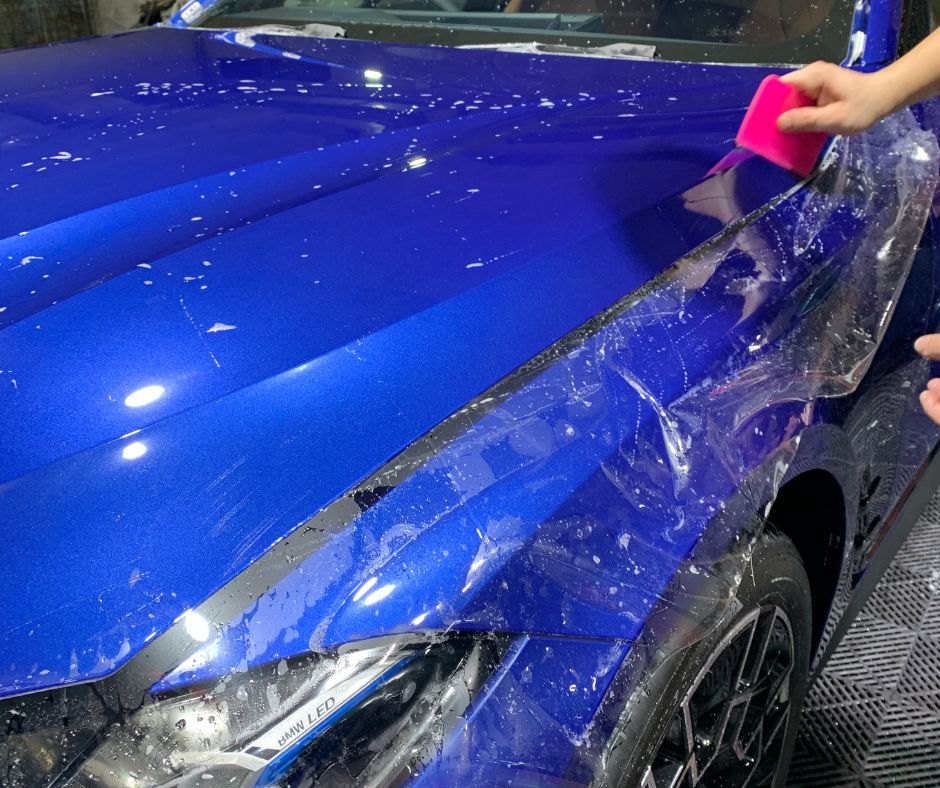
KubeBond PPF is an advanced automotive Paint Protection Film designed to create a physical barrier over your vehicle's painted surfaces.
Unlike liquid-applied protective treatments, KubeBond PPF uses a pre-manufactured film that is professionally installed onto the car's exterior.
This protective layer helps reduce direct contact between the underlying paint and common hazards, including stone chips, minor scratches, road debris and environmental contaminants.
KubeBond PPF is available in different formulations, with technologies designed to address specific protection needs.
Depending on the selected series, these features include:
Self-healing technology: Allows certain minor surface scratches to recover under suitable conditions.
High-gloss finish: Helps preserve the vehicle's original appearance.
Chemical and corrosion resistance: Provides additional protection against environmental exposure.
Hydrophobic properties: Helps repel water and makes routine cleaning easier.
Temperature resistance: Designed to withstand demanding outdoor conditions.
These characteristics make KubeBond PPF an option for drivers who want to preserve their vehicle's paintwork without significantly altering its original appearance.
What Is Liquid PPF?
Liquid PPF refers to a category of liquid-applied protective products designed to form a layer over automotive paint after curing.
Unlike conventional PPF, which comes in sheets of protective film, liquid PPF is typically applied through spraying or another manufacturer-specified application process.
Once cured, the product forms a protective layer intended to reduce certain types of surface wear and environmental exposure.
Depending on the formulation, liquid PPF may offer benefits such as:
Enhanced gloss and surface smoothness
Hydrophobic properties
Resistance to certain contaminants
Protection against light surface abrasions
Coverage across complex panel shapes
However, not every liquid PPF product performs identically.
Some are designed primarily for surface protection, while others are marketed as thicker, peelable protective systems.
Their actual performance depends on factors such as chemical composition, cured thickness, application quality and maintenance.
Therefore, liquid PPF should not automatically be considered equivalent to conventional film-based PPF.
KubeBond PPF vs Liquid PPF: Key Differences
Although both products aim to protect automotive paintwork, KubeBond PPF and liquid PPF differ in their application methods, protective structures and performance characteristics.
Understanding these distinctions is important when deciding which solution best matches your priorities.
| Feature | KubeBond PPF | Liquid PPF |
|---|---|---|
| Application | Pre-manufactured film installed over paint | Liquid applied and cured |
| Protection type | Physical film barrier | Cured protective layer |
| Stone chip resistance | Designed to resist minor impacts and road debris | Depends on formulation and cured thickness |
| Scratch resistance | Available with self-healing technology | Varies by product |
| Hydrophobic properties | Available in Ceramic-Coated PPF | Available in certain formulations |
| Gloss enhancement | High-gloss finish | Depends on product |
| Thickness | Determined by the selected film specification | Depends on product and application |
| Maintenance | Regular gentle washing | Product-specific aftercare |
| Removal | Professional film removal | Depends on whether the product is peelable or removable |
The most important difference is the type of protective barrier each product creates.
KubeBond PPF uses a purpose-manufactured film with defined material characteristics, while liquid PPF relies on a protective layer formed during application and curing.
This distinction can influence how each product responds to scratches, impacts and long-term environmental exposure.
1. Which Offers Better Protection Against Scratches and Stone Chips?
For many car owners, preventing scratches and stone chips is the primary reason for investing in paint protection.
This is particularly relevant for vehicles regularly driven along Singapore's expressways, where loose stones and debris can strike exposed painted panels.
KubeBond PPF: Physical Protection Against Road Hazards
KubeBond PPF provides a physical barrier designed to help absorb minor impacts before they reach the vehicle's original paintwork.
This makes it particularly relevant for vulnerable areas such as:
Front bumpers
Bonnets
Side mirrors
Front fenders
Door edges
Certain KubeBond PPF formulations also incorporate self-healing technology, helping reduce the appearance of minor surface scratches.
For example, KubeBond Instant Healing PPF is designed to recover from certain light scratches without additional heating.
However, no PPF can prevent every type of damage. Severe impacts, deep scratches and sharp objects may still penetrate the film.
Liquid PPF: Performance Depends on the Product
Liquid PPF can provide varying degrees of scratch and impact resistance, depending on the formulation and thickness of the cured layer.
Some products focus on gloss and environmental resistance, while thicker liquid-applied systems may be designed to offer greater physical protection.
Because product specifications vary considerably, it is difficult to make a universal comparison.
If preventing stone chips is your main priority, conventional film-based PPF such as KubeBond is generally a more established option to consider.
2. Which Offers Better Self-Healing Technology?
Self-healing technology is an important feature for owners who want to minimise the visibility of minor scratches.
Certain protective films use specialised surface materials that can recover from light abrasions under appropriate conditions.
KubeBond PPF Self-Healing Features
KubeBond offers different PPF formulations with self-healing properties.
Its Instant Healing PPF series is designed to recover from certain minor surface scratches without requiring additional heating.
Meanwhile, the KubeBond Black PPF series includes self-healing capabilities at room temperature.
These technologies can help maintain the film's surface appearance when exposed to light washing marks or minor abrasions.
Nevertheless, self-healing is limited to suitable surface-level damage. Deep scratches, torn film and damage to the underlying paint cannot be repaired through self-healing alone.
Does Liquid PPF Offer Self-Healing?
Some liquid PPF products are marketed with self-healing properties, but this capability is not universal.
Its effectiveness depends on the product's chemistry, the severity of the damage and the conditions required for recovery.
Before choosing liquid PPF, ask the installer whether the specific product offers self-healing and what types of scratches it can realistically address.
3. Which Is Better for Gloss and Appearance?
Paint protection should not only reduce damage. It should also help maintain the car's appearance.
Both KubeBond PPF and liquid PPF can enhance or preserve gloss, although the results depend on the product and application quality.
KubeBond PPF: Preserving the Original Finish
KubeBond PPF is available in high-gloss formulations designed to maintain the appearance of the original paintwork.
When professionally installed, clear PPF helps preserve the vehicle's colour and finish while adding a protective layer.
KubeBond's product information also highlights installation characteristics intended to minimise orange peel and glue marks.
For owners of new vehicles, this can be particularly appealing because the objective is often to maintain the factory finish for as long as possible.
Liquid PPF: A Smooth Protective Layer
Liquid PPF may provide a glossy appearance because it is applied as a liquid and cures over the painted surface.
However, the final result depends heavily on surface preparation, application technique and curing conditions.
Improper application may lead to uneven thickness, texture variations or visible imperfections.
Regardless of the chosen system, professional preparation and application remain essential for achieving a satisfactory finish.
4. Which Provides Better Resistance Against Environmental Contaminants?
Singapore's climate creates several challenges for vehicle maintenance.
High humidity, frequent rainfall, strong sunlight and everyday road grime can affect exposed automotive surfaces.
Bird droppings and tree sap may also leave stubborn stains if they are not removed promptly.
Environmental Protection With KubeBond PPF
KubeBond PPF is designed with chemical and corrosion resistance to help protect the underlying paintwork.
Its Ceramic-Coated PPF series also features hydrophobic properties and resistance to oily contaminants.
These characteristics can help make routine cleaning more convenient by reducing the tendency for water and certain contaminants to cling to the surface.
However, this does not mean the film is completely stain-proof.
Regular washing and prompt removal of contaminants remain important for preserving the protective film.
Environmental Protection With Liquid PPF
Liquid PPF products may also provide resistance to water, dirt and certain environmental substances.
However, their protective characteristics vary by formulation.
Some products prioritise water repellency and gloss, while others focus on creating a thicker protective layer.
When comparing options, examine the manufacturer's chemical resistance specifications instead of relying solely on general protection claims.
5. Which Is Easier to Maintain?
Both KubeBond PPF and liquid PPF require maintenance to remain in good condition.
Although protective treatments can reduce exposure to certain hazards, neither eliminates the need for regular car washing.
Maintaining KubeBond PPF
For vehicles fitted with KubeBond PPF, recommended maintenance practices generally include:
Washing regularly with a suitable pH-neutral shampoo
Using clean microfibre wash mitts and drying towels
Avoiding abrasive brushes and aggressive polishing
Removing bird droppings and tree sap promptly
Following the installer's instructions after application
KubeBond Ceramic-Coated PPF also features hydrophobic properties that can help make routine washing easier.
Maintaining Liquid PPF
Maintenance requirements for liquid PPF depend on the specific product.
Some systems require particular cleaning products or maintenance treatments, while others have restrictions during the initial curing period.
Always follow the manufacturer's aftercare instructions.
Regardless of the protection method, gentle washing practices can help preserve the finish and minimise unnecessary surface wear.
What Are the Different Types of KubeBond PPF?
One advantage of KubeBond PPF is the availability of different film technologies designed for varying protection preferences.
KubeBond Instant Healing PPF
This formulation focuses on self-healing technology and a high-gloss finish.
According to KubeBond's product information, its features include:
Scratch-healing technology without additional heating
Advanced chemical and corrosion resistance
High-gloss surface
Resistance to high outdoor temperatures
It may appeal to drivers who prioritise reducing the appearance of minor surface scratches.
KubeBond Ceramic-Coated PPF
The Ceramic-Coated series combines a physical protective film with surface characteristics associated with ceramic technology.
Its features include:
Hydrophobic properties
Resistance to oily contaminants
High-gloss finish
Advanced chemical and corrosion resistance
This option may suit drivers who want physical paint protection together with easier exterior maintenance.
KubeBond Black PPF
KubeBond Black PPF offers another formulation with protective and appearance-related characteristics.
Its listed features include:
Self-healing at room temperature
Resistance to discoloration and oxidation
Anti-fouling properties
Hydrophobic performance
Resistance to scratches and chipping
The availability and suitability of each formulation should be confirmed with your installer before choosing a package.
Is KubeBond PPF Worth It for Singapore Car Owners?
Whether KubeBond PPF is worth installing depends on your vehicle, driving habits and protection priorities.
For drivers who regularly travel on expressways, exposed front panels face a greater risk of encountering loose stones and road debris.
Similarly, vehicles frequently parked in tight spaces may be more vulnerable to incidental scratches and abrasions.
KubeBond PPF provides an additional protective barrier that can help reduce exposure to these common hazards.
It may be particularly worth considering if:
You recently purchased a new car and want to preserve its original paintwork.
You frequently drive on expressways.
You own a vehicle with expensive or difficult-to-match paintwork.
You want additional protection for vulnerable exterior panels.
You prefer preventive paint protection over dealing with avoidable cosmetic repairs.
However, full-body coverage is not necessarily required for every vehicle.
Owners with smaller budgets may prefer protecting high-impact areas first, such as the bonnet, front bumper and side mirrors.
The right choice ultimately depends on the level of protection you want and how much you are comfortable investing.
Frequently Asked Questions
Is KubeBond PPF Better Than Liquid PPF?
KubeBond PPF may be more suitable for drivers prioritising physical protection against stone chips and minor impacts.
Liquid PPF performance varies depending on its formulation and cured thickness, so comparisons should be based on specific products rather than broad claims.
Is KubeBond PPF the Same as Ceramic Coating?
No. KubeBond PPF is a physical film installed over automotive paint, while ceramic coating is a liquid-applied surface treatment.
KubeBond also offers Ceramic-Coated PPF, which combines physical film protection with hydrophobic surface properties.
Can KubeBond PPF Prevent All Scratches?
No paint protection system can guarantee complete protection against every scratch or impact.
KubeBond PPF helps reduce certain types of damage, while selected formulations feature self-healing technology for minor surface marks.
Can KubeBond PPF Be Removed?
PPF can generally be removed by trained professionals using appropriate methods.
However, removal results depend on the condition of the film, the underlying paintwork and whether the vehicle has been repainted.
How Long Does KubeBond PPF Last?
Its service life depends on the selected formulation, installation quality, driving environment and maintenance.
Ask your installer about the specific product's warranty, expected durability and recommended aftercare before installation.
KubeBond PPF vs Liquid PPF: Which Should You Choose?
Both KubeBond PPF and liquid PPF are intended to provide additional protection for automotive paint, but they achieve this through different technologies.
Liquid PPF may appeal to car owners considering liquid-applied protective systems. However, performance varies significantly between products, making it essential to review their specifications carefully.
For drivers prioritising a physical protective barrier against stone chips, minor scratches and road debris, KubeBond PPF is an option worth considering.
Its range of film technologies, including self-healing and ceramic-coated formulations, allows car owners to explore different protective characteristics based on their needs.
At Ceramic Works, we specialise in professional KubeBond Paint Protection Film installation for Singapore car owners.
With over 20 years of automotive care experience, our team understands the importance of proper surface preparation, careful installation and selecting the right protection for different vehicles.
Whether you're protecting a brand-new car or looking to preserve your existing vehicle's appearance, we can help you explore a suitable PPF solution.
Give your car the protection it deserves with KubeBond PPF.
Explore Our KubeBond Paint Protection Film Services and Request a Quote