
What Causes Paint Protection Film on a Car to Lift?
What Causes Paint Protection Film on a Car to Lift?
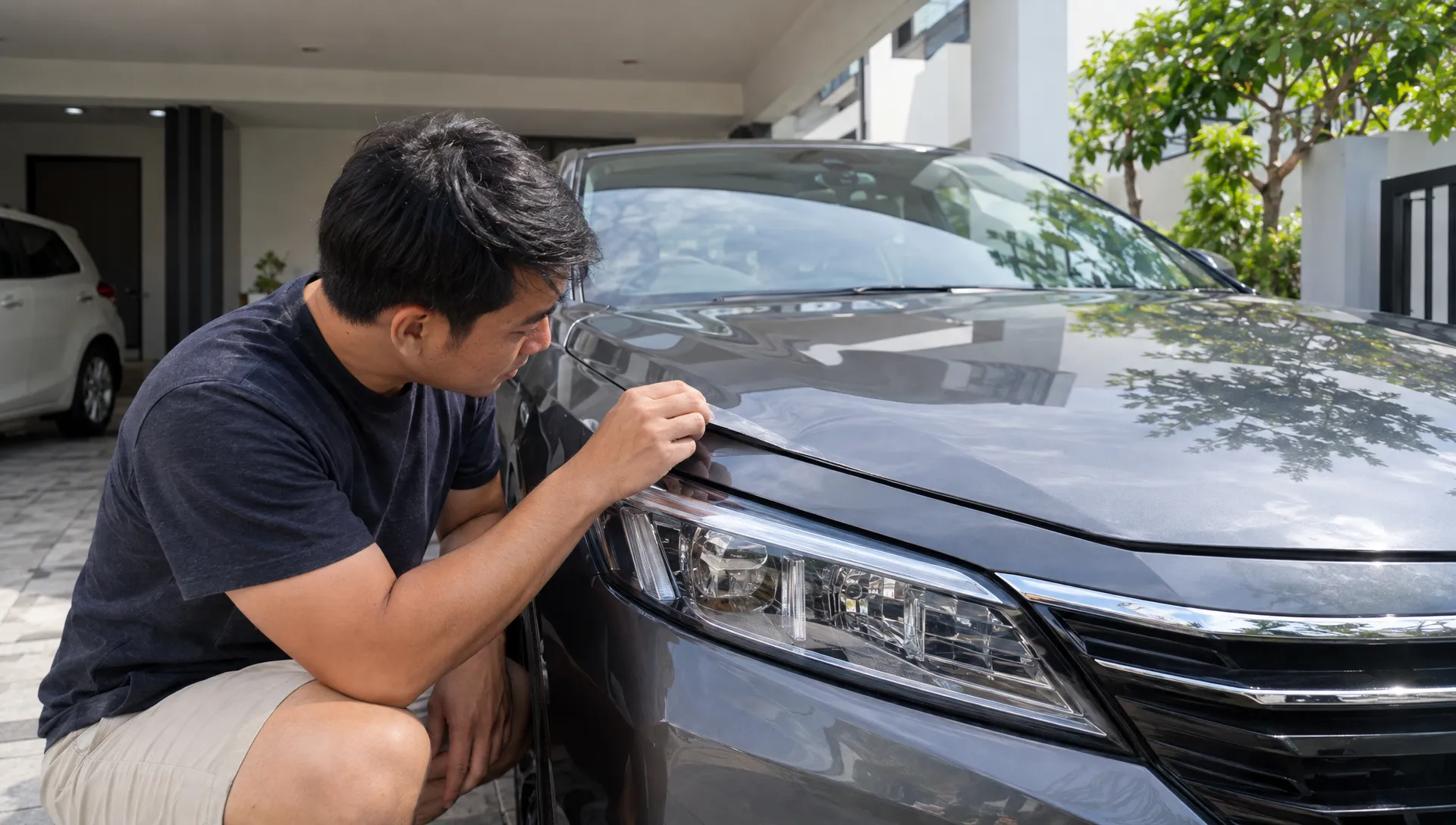
Lifting paint protection film on car panels usually means the adhesive bond has weakened or was never fully established. Contamination, installation tension, unsuitable paintwork and washing damage can all contribute. If you are considering Paint Protection Film or have noticed an existing edge peeling, identifying the cause helps determine whether a local repair or replacement is appropriate.
This guide explains the common causes, how to distinguish lifting from drying marks and what Singapore car owners should check before arranging repairs.
Why Does PPF Lift at the Edges?
PPF uses a pressure-sensitive adhesive to bond to a properly prepared painted surface. Its edges are vulnerable because they are exposed to washing, handling and dirt. Curved bumpers, panel recesses and tightly wrapped corners can also place tension on the film.
Lifting happens when the forces pulling the film away exceed the adhesive bond holding it down. A poorly prepared edge may loosen soon after installation, while an older installation may develop problems through wear or adhesive deterioration.
Timing provides a clue, but it does not establish fault. An installer should examine the affected area, installation history and condition of the paint before recommending a remedy.
What Causes Paint Protection Film on Car Panels to Lift?
Contamination or Incomplete Surface Preparation
Wax, oily residue, polishing compounds and embedded dirt can interfere with adhesion. A panel may look clean while still carrying residue, particularly around badges, bumper joins and panel edges.
Installation solution must also be removed appropriately as the film is positioned and secured. Residual moisture near an edge can delay bonding, although a temporary moisture pocket is not automatically an installation failure.
If one corner repeatedly lifts, simply pressing it down may not address the underlying contamination. The installer needs to assess whether the adhesive remains clean and usable.
Excessive Stretching and Poor Edge Finishing
Film must conform to curves without being overstretched. Excessive tension can pull it back towards its original shape, causing narrow raised channels or lifted corners.
Edge wrapping also depends on panel geometry and access. Not every edge can or should be wrapped. Where wrapping is appropriate, the return surface must be clean and the film properly secured.
A visible cut edge is not automatically defective. More useful warning signs include separation, persistent raised channels or an edge that repeatedly comes loose after attention.
Repainted, Damaged or Insufficiently Cured Paint
The stability of paint protection film on car panels depends partly on the finish beneath it. Flaking clear coat, poorly bonded repair paint and rough touch-ups can prevent a reliable installation.
Freshly repainted panels require particular care. The appropriate waiting period depends on the paint system, curing process and refinisher’s instructions, so there is no universal number of days that suits every repair.
Tell the installer about accident repairs, resprayed bumpers and aftermarket bodywork before application. Film cannot stabilise failing paint, and later removal may carry additional risks where the underlying finish is weak.
Washing Damage, Abrasion and Ageing
A pressure-washer jet directed into a film edge can force water underneath it. Aggressive brushing, repeated rubbing with a wash mitt or snagging an exposed corner with a cloth can also initiate separation.
Singapore’s high humidity and abundant rainfall make suitable installation conditions and aftercare relevant. However, tropical weather alone does not prove why a particular installation failed.
Heat exposure and ageing can contribute to deterioration over time, depending on the film and its use. Once an edge opens, dirt and repeated wetting can make the separation harder to repair cleanly.
Is It Genuine Lifting or Residual Moisture?
A newly installed film may show temporary moisture-related marks while it dries. These should not be confused with a free edge that has separated from the panel.
Use the installer’s product-specific settling guidance rather than assuming every bubble will disappear within a fixed period.
| What You Notice | Possible Explanation | Sensible Next Step |
|---|---|---|
| Mild haze or enclosed water pockets soon after fitting | Residual installation moisture | Photograph it and follow the installer’s drying guidance |
| A free edge or flap | Actual separation from the paint | Arrange an inspection and avoid disturbing it |
| Raised channels around a curve | Tension or incomplete adhesion | Ask the installer to assess the fit |
| A dark line beneath an opening edge | Possible dirt ingress | Avoid pushing the contaminated edge back down |
| A persistent or growing bubble | Trapped air, contamination or another adhesion problem | Have it assessed rather than puncturing it |
When checking paint protection film on car panels, note whether the affected area is shrinking, stable or spreading. Appearance alone cannot confirm the cause, but that history helps the workshop diagnose it.
What Should You Do When an Edge Lifts?
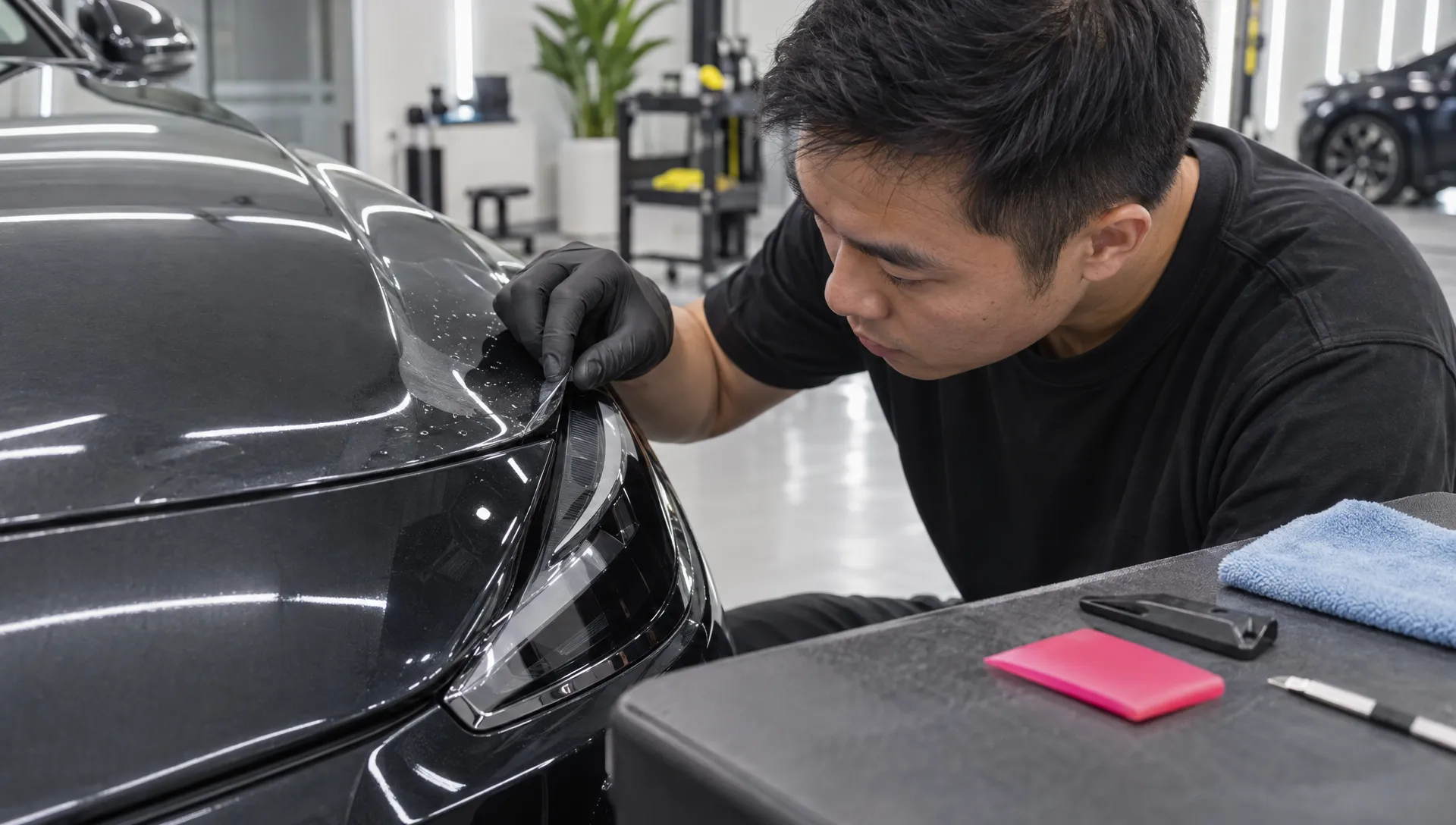
The priority is to avoid turning a small adhesion problem into a contaminated or torn section.
- Document the area: Take close-up and wider photographs showing the panel, lifted edge and surrounding film.
- Avoid disturbing it: Do not peel it further, puncture bubbles or repeatedly press a dirty flap onto the paint.
- Keep pressure away: Avoid pressure washing and automatic brush washes until the installer advises how to proceed.
- Contact the workshop promptly: Share when you first noticed the issue and whether the panel was recently washed, repaired or impacted.
Do not apply household glue, solvents or concentrated heat. These can damage the film, adhesive or paint and complicate an otherwise straightforward assessment.
If the film is loose enough to flap while driving, ask the workshop for handling advice before continuing to use the car normally.
Can Lifted Film Be Repaired?
Sometimes a small, clean area can be professionally resecured. That depends on the film’s condition, adhesive cleanliness, installation tension and accessibility of the edge. Repeatedly warming and pressing the same corner is not a reliable solution if the underlying cause remains.
Replacing the affected section may be more appropriate when paint protection film on car panels is stretched, creased or contaminated underneath. A sound repair should not leave excessive tension that simply causes another lift nearby.
If unstable paint is involved, the finish may need attention before new film is installed. Ask whether the proposed remedy addresses the cause or only the visible symptom.
What Should You Check in the Warranty?
Material coverage and installation workmanship coverage are not necessarily the same. A manufacturer’s warranty may address specified film defects, while the installer’s terms may deal separately with fitting-related lifting. Neither should be assumed to cover every case.
Ask for written clarification on:
- Covered defects: Whether edge lifting, bubbling, cracking or discolouration are included and under which conditions.
- Repair responsibilities: Whether inspection, labour, removal and replacement material are covered.
- Exclusions and evidence: Requirements concerning aftercare, repainted panels, physical damage, registration and proof of purchase.
For future installations, assess how to choose a PPF installer in Singapore, including preparation standards and aftercare support rather than price alone.
Keep your invoice, installation photographs and correspondence. These help establish what was fitted and when the problem appeared without relying on memory.
Frequently Asked Questions
Will a Lifted Edge Settle Down by Itself?
A genuinely separated edge should be inspected rather than assumed to settle. Enclosed moisture marks may improve during drying, but an open edge can collect dirt and become harder to resecure.
Can I Wash the Car While the Film Is Lifting?
Ask the installer first. Avoid directing water into the opening, scrubbing the edge or catching it with a drying cloth. Fresh installations should follow the workshop’s specific washing restrictions.
Does Self-Healing Fix Edge Lifting?
No. Where a film has self-healing properties, these generally concern minor surface marks in its top layer. They do not restore a failed adhesive bond or remove contamination beneath the film.
Conclusion: Have Lifting Edges Assessed Early
Lifting paint protection film on car panels can stem from preparation problems, installation tension, unstable paint or damage during use. The right repair depends on which cause is present, not just how small the loose corner looks.
Avoid DIY adhesives and aggressive washing. Contact Ceramic Works with clear photographs and your installation history to discuss an assessment and request a quote where needed.