
What Does a Ceramic Coating Professional Charge for Removal?
What Does a Ceramic Coating Professional Charge for Removal?
A ceramic coating professional should assess your paint before confirming a removal price, because refreshing a tired surface is different from stripping an existing coating and correcting defects. Before booking a fresh ceramic coating, ask whether removal is necessary and what the preparation charge covers. This guide explains how to assess a Singapore removal quote, separate essential work from optional correction and avoid paying for the wrong job.
What Does a Ceramic Coating Professional Charge for Removal?
There is no single standard removal fee across Singapore. The charge depends on the labour required, the surfaces involved and whether the quote includes paint correction or a replacement coating. A package price for a new application is not automatically a removal-only price.
To understand the calculation, consider a hypothetical labour rate of S$80 per hour. Four hours would cost S$320, while six hours would cost S$480, before any separately charged preparation, materials or applicable GST. These figures illustrate the calculation only. They are not market estimates or Ceramic Works prices.
The useful figure to request is a written total for your vehicle, supported by an inspection and a defined scope. Ask the ceramic coating professional to separate existing-coating removal from optional defect correction and a new application, even when those items are offered together.
What Makes One Removal Quote Higher Than Another?
Vehicle size matters, but paint condition and the required finishing standard can change the workload just as much. Two similar-sized cars may need different approaches if one has sound original paint and the other has repaired panels or stubborn surface defects.
| Cost Factor | Why It Changes the Work | What to Clarify |
|---|---|---|
| Vehicle size and panel shape | Larger surfaces and intricate areas take more time | Which painted surfaces are included? |
| Existing coating condition | Uneven or persistent coverage may require additional work | Is the estimate based on a test area? |
| Paint defects | Swirls, staining and scratches may need correction beyond removal | Which defects will remain? |
| Previous paint repairs | Repainted panels may require a different approach | Has the paint history been considered? |
| Final finish required | Preparing for repainting differs from preparing for a fresh coating | What condition will the surface be left in? |
A ceramic coating professional should explain the work behind a higher quote rather than relying on vehicle category alone. More polishing is not automatically better, particularly where clear coat preservation is the priority.
Does the Existing Coating Actually Need Removing?
Weak water beading does not, by itself, prove that the coating has failed. Road film, mineral deposits and other contamination can mask surface performance. In Singapore, frequent exposure to rain and outdoor parking makes a proper assessment more useful than judging the finish immediately after a shower.
A suitable wash and decontamination process may improve performance without full removal. Conversely, visible application defects, incompatible products or preparation for paint repairs may justify removing the existing layer.
Ask for the diagnosis before approving the solution. The installer should explain whether the problem sits on top of the coating, within the coating or in the underlying paint. That distinction can prevent you from paying for polishing when cleaning would have addressed the concern.
What Should the Removal Work Include?
Inspection and a Test Area
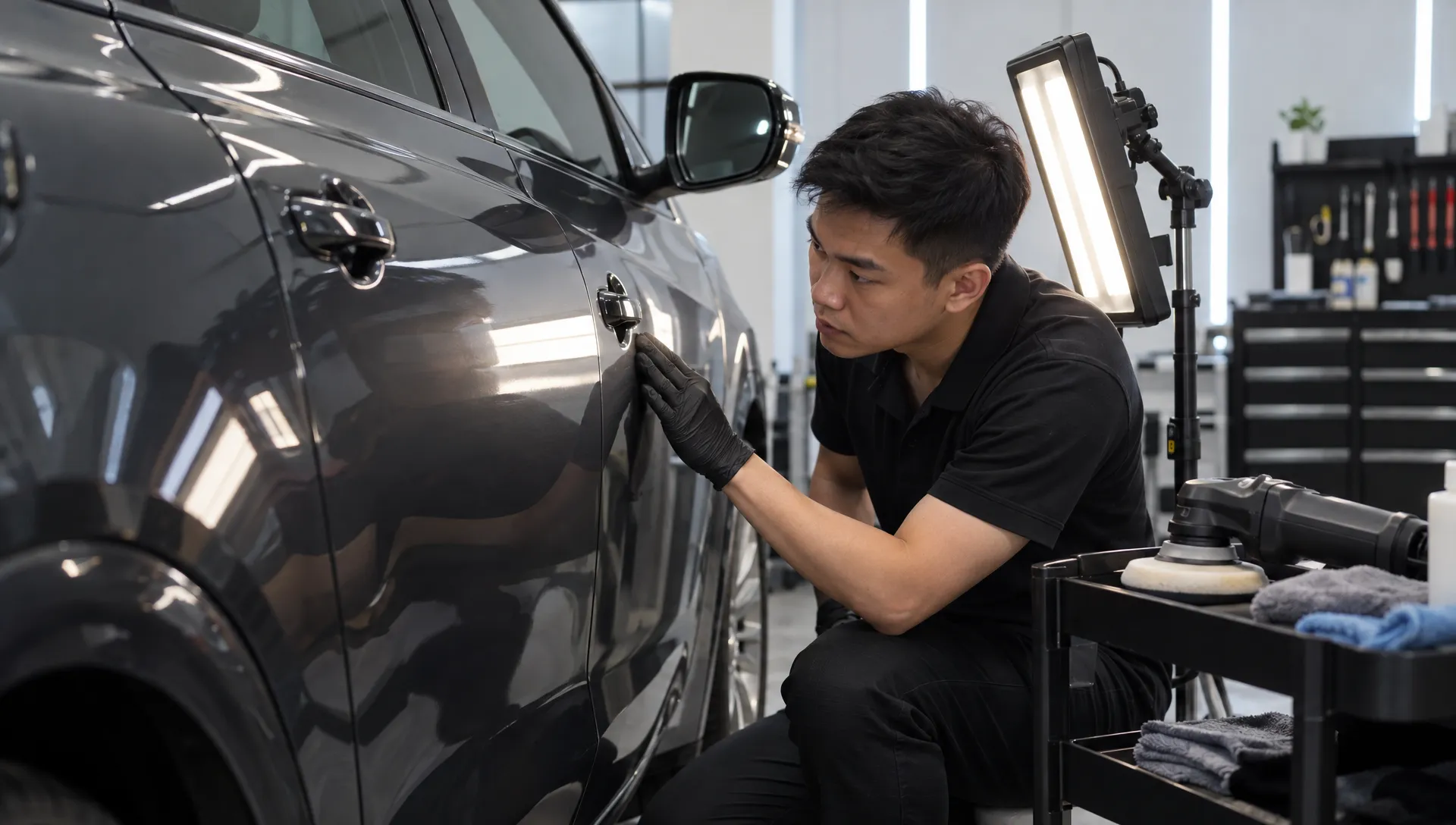
The starting point should be an inspection under suitable lighting, with attention to repaired panels, thin areas and existing defects. A small test area helps establish the least aggressive effective process before committing to the whole car.
Paint thickness readings can support that assessment, but a conventional gauge does not reliably isolate the ceramic coating from the underlying paint system. A reading alone cannot prove complete removal.
Controlled Removal and Surface Checking
Cured coatings often require controlled abrasive polishing. A strong wash or solvent wipe should not automatically be treated as proof that the coating has been removed.
Ask how the ceramic coating professional will assess the finished surface and avoid unnecessary additional polishing. Reduced beading alone is not conclusive, since polishing residue or surface contamination can also affect water behaviour.
Removal and cosmetic correction are related but different tasks. Removing the existing layer does not guarantee that deep scratches, etched marks or every swirl will disappear. Understanding why paint correction matters before coating helps you decide whether that additional work is worthwhile.
How to Compare Removal Quotes Fairly
Compare quotes against the same intended outcome. A removal-only estimate should not be judged directly against a package that includes extensive correction and a fresh application.
Before accepting, ask for these points in writing:
- Covered surfaces: Confirm whether the price covers all painted panels or selected areas only.
- Preparation: Establish whether washing and decontamination are included.
- Correction allowance: Identify which defects the quoted polishing is intended to address.
- Additional charges: Require approval before extra polishing stages or other work begins.
- Collection condition: Confirm whether the car will leave with bare paint or a separately agreed protective product.
Ask the ceramic coating professional whether the estimate is fixed after inspection or may change following the test area. An agreed approval limit helps prevent an initially modest quote from becoming a much larger bill.
Check whether applicable Singapore GST at 9% is included in the final total. GST should only be charged by a GST-registered business.
Check Warranty Eligibility Before Authorising Removal
If the coating appears to have failed earlier than expected, contact the original installer before approving abrasive work elsewhere. Gather the invoice, product details, warranty registration and maintenance records, then check the terms for inspection or remedial work.
Removal could affect the evidence available for a claim, and outside intervention may affect eligibility under the warranty terms. Do not assume that poor beading automatically qualifies for replacement or that every warranty covers removal costs.
Confirming the position first may save you from paying independently for work that should have been assessed under an existing agreement.
Frequently Asked Questions
Is Removal Included in a New Coating Package?
Not necessarily. A ceramic coating professional may include existing-layer removal within preparation, quote it separately or adjust the price after inspection. Ask for the scope in writing rather than assuming that “paint preparation” includes everything.
Can I Remove the Coating Myself to Save Money?
DIY abrasive removal can introduce polishing marks or remove unnecessary clear coat. Harsh chemicals may also damage trim without reliably removing a cured coating. If cost is the concern, first establish whether full removal is actually needed.
Will Removal Damage the Paint?
Controlled polishing can remove some underlying clear coat as well as the coating. The aim is to use the least aggressive effective process, guided by paint condition and a test area. Be cautious of promises of risk-free removal on every vehicle.
Conclusion: Pay for a Defined Result
A useful removal quote explains what needs removing, how it will be done and what finish you will receive. Separate essential preparation from optional correction, check warranty eligibility and confirm the total before authorising work.
Ask Ceramic Works to assess your paint and discuss preparation before a fresh application. Use the car coating booking checklist to prepare your questions and confirm the agreed scope.