
How to Choose Hood Protector Film for Your Daily Drive
How to Choose Hood Protector Film for Your Daily Drive
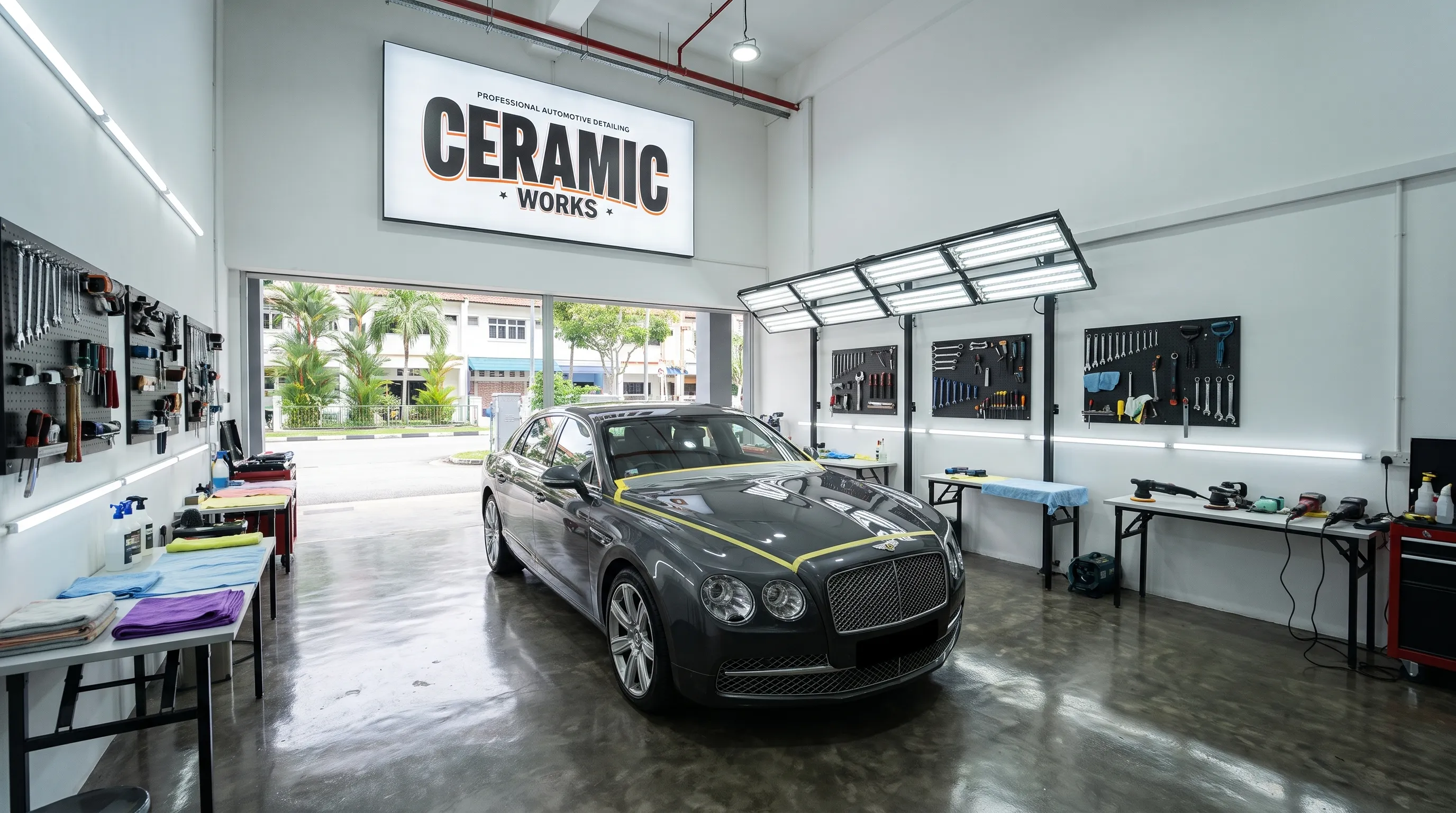
Choosing hood protector film starts with your commute, not just the cheapest installation quote. A transparent film adds a sacrificial layer over your bonnet, helping reduce stone-chip damage and light surface scratches. Ceramic Works’ Paint Protection Film service is relevant if you want physical paint protection. This guide explains how to compare bonnet coverage, film materials, installation quality and aftercare before deciding what suits your daily drive.
What to Choose for Daily Driving
For drivers who regularly use expressways and want protection across the entire bonnet, full-bonnet coverage using a clearly identified automotive film is a sensible starting point. Partial coverage can suit a tighter budget, provided you accept an exposed upper section and a potentially visible join line.
Look for a film manufacturer and product model you can verify, a finish that suits your paint and written warranty terms. Installation quality matters as much as the material: poorly fitted edges can collect dirt or lift even when the film itself is good.
Protection also has limits. Film can absorb some minor impacts, but it cannot guarantee that every stone strike will leave the paint untouched. It will not prevent dents or repair damage already underneath it.
Which Hood Protector Film Coverage Suits Your Commute?
Choose coverage according to where you drive and how much of the bonnet you want protected. A short urban commute does not eliminate chip risk, while frequent expressway trips make broader coverage worth considering.
| Coverage | Main Advantage | Main Trade-Off |
|---|---|---|
| Partial bonnet | Lower material use and usually a lower initial cost | Leaves part of the panel exposed and may show a join line |
| Full bonnet | Covers the complete painted bonnet surface | Usually costs more than partial coverage |
| Full bonnet with wrapped edges where feasible | Can conceal accessible film edges for a tidier finish | Depends on bonnet design, access and installation method |
Ask the installer to show exactly where coverage ends. “Full bonnet” does not automatically mean every edge will be tucked underneath, especially around vents, tight corners or inaccessible areas.
Compare quotes for the same coverage rather than comparing headline prices. One quote may include only a leading-edge strip, while another covers the whole panel. Neither description should be left to assumption.
Check the Material, Installation and Warranty
Verify the Film Material and Finish
Many automotive protection films use thermoplastic polyurethane, commonly called TPU. However, the material name alone does not establish optical clarity, stain resistance, adhesive quality or durability.
When comparing hood protector film, ask for the exact product specification rather than accepting descriptions such as “premium clear protection”. Check whether the finish is gloss or matte, since applying the wrong finish can visibly change the bonnet’s appearance.
Singapore’s year-round heat, humidity and rainfall make outdoor exposure and regular cleaning relevant considerations. Ask how the product warranty handles yellowing, cracking, staining and adhesive failure. Do not assume all four are covered.
If a self-healing topcoat is advertised, confirm what it can address and under which conditions. Fine surface marks may improve with warmth on suitable products; deep cuts and punctures will not simply disappear.
Inspect Preparation and Edge Work
The bonnet should be thoroughly cleaned and inspected before application. Existing chips, scratches and paint defects do not vanish beneath transparent film. Repainted panels need particular attention because paint condition and adhesion can affect installation and eventual removal.
Ask whether the installer uses a pre-cut pattern or another fitting method, and how cutting near painted surfaces is controlled. Neither method guarantees a good result without careful workmanship.
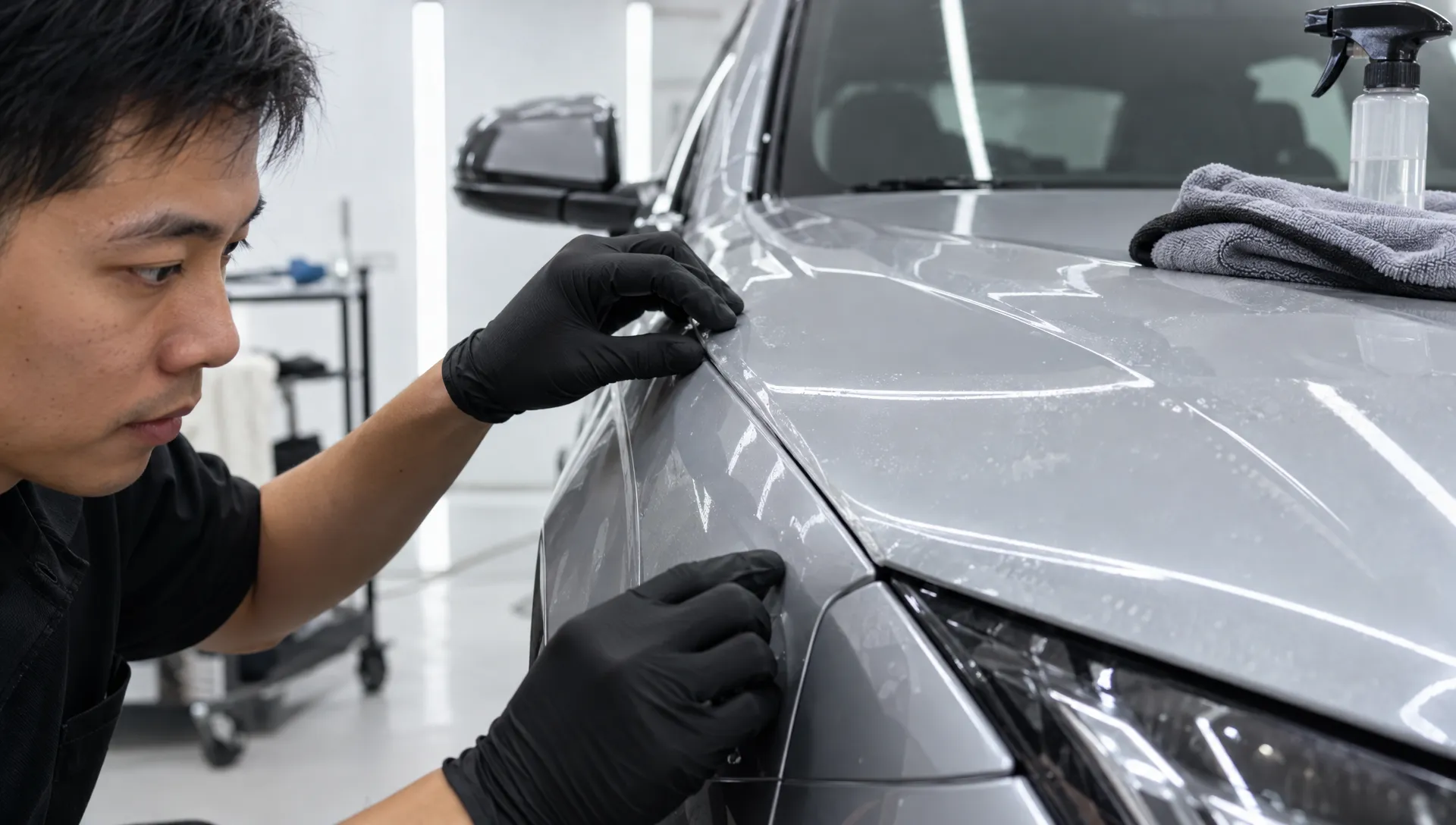
A well-installed hood protector film should have consistent alignment, securely finished edges and no obvious trapped contamination. Ask what temporary moisture marks may occur during curing and when the installer wants you to return if something looks wrong.
For an example of the service on an actual vehicle, see this Honda protected with KubeBond film. Use completed installations as a starting point for discussing finish expectations, not as a substitute for inspecting the proposed material.
Read the Warranty Beyond Its Duration
A long warranty is useful only if you understand its scope. Check who provides it, what proof of purchase is required and whether an accepted claim includes removal and replacement labour.
Also ask about exclusions for stone impacts, neglected contamination, pressure-washer damage and pre-existing paint issues. Keep the product details, invoice and installation photographs together so that any later discussion is based on records rather than memory.
Plan for Everyday Care
Choose hood protector film you can maintain realistically. It still needs washing, and leaving bird droppings or insect residue on the surface can cause staining or damage despite the protective layer.
Follow the installer’s initial curing and washing instructions. After that, use a film-compatible shampoo, clean wash equipment and a soft drying towel. Avoid scrubbing stubborn marks aggressively or directing a pressure-washer jet into exposed edges.
Water beading does not mean the bonnet cleans itself. Rain can leave mineral deposits and road grime behind, particularly when droplets dry on a hot panel. Wash in the shade when the surface is cool whenever practical.
If an edge starts lifting, do not trim it or glue it down yourself. Photograph the affected area and ask the installer to assess it before dirt spreads underneath.
Questions to Ask Before Booking
A useful quote should make the scope clear enough that you can compare it with another proposal. Request answers to these points before committing:
Coverage: Does the price cover a partial or complete bonnet, and which edges can be wrapped?
Product: What are the manufacturer, model, material and finish?
Preparation: How will existing chips, contamination or repainted areas be handled?
Support: What does the warranty cover, and what happens if an installation issue appears?
Ask about the expected handover condition and any follow-up inspection as well. These practical details often tell you more about the installation process than broad claims about hardness or longevity.
Frequently Asked Questions
Is TPU Better Than PPF?
They are not competing categories. PPF means paint protection film, while TPU is a material used to make many such films. Compare the complete product, including its adhesive, topcoat and warranty, rather than treating “TPU” as a guarantee of quality.
Can I Polish Hood Protector Film?
Only use a polishing process explicitly approved for that film. Abrasive polishing can alter the surface or damage its topcoat. For stains or scratches, start with the manufacturer’s care guidance and ask the installer before attempting correction.
Will Bonnet Film Reduce Road or Engine Noise?
No. Exterior paint film is not an acoustic treatment. Dedicated noise barriers and anti-vibration materials address different sound-control problems. Do not choose bonnet film expecting it to quieten the cabin or resolve mechanical rattles.
Can Film Be Applied Over Existing Stone Chips?
Sometimes, but the chips may remain visible and can affect the finish around damaged areas. Have the paint inspected first. If repairs are needed, ask the repairer and installer about suitable curing requirements before applying film.
Choose the Right Hood Protector Film for Lasting Paint Protection
The right bonnet protection combines suitable coverage, a traceable film product and careful installation. For daily driving, prioritise clear specifications, well-finished edges and usable warranty support over vague promises of scratch-proof paint.
Ask Ceramic Works about bonnet coverage and request a written quote that identifies the proposed film and installation scope. If you are still weighing the expense, consider whether film protection suits your ownership plans before choosing your coverage.