
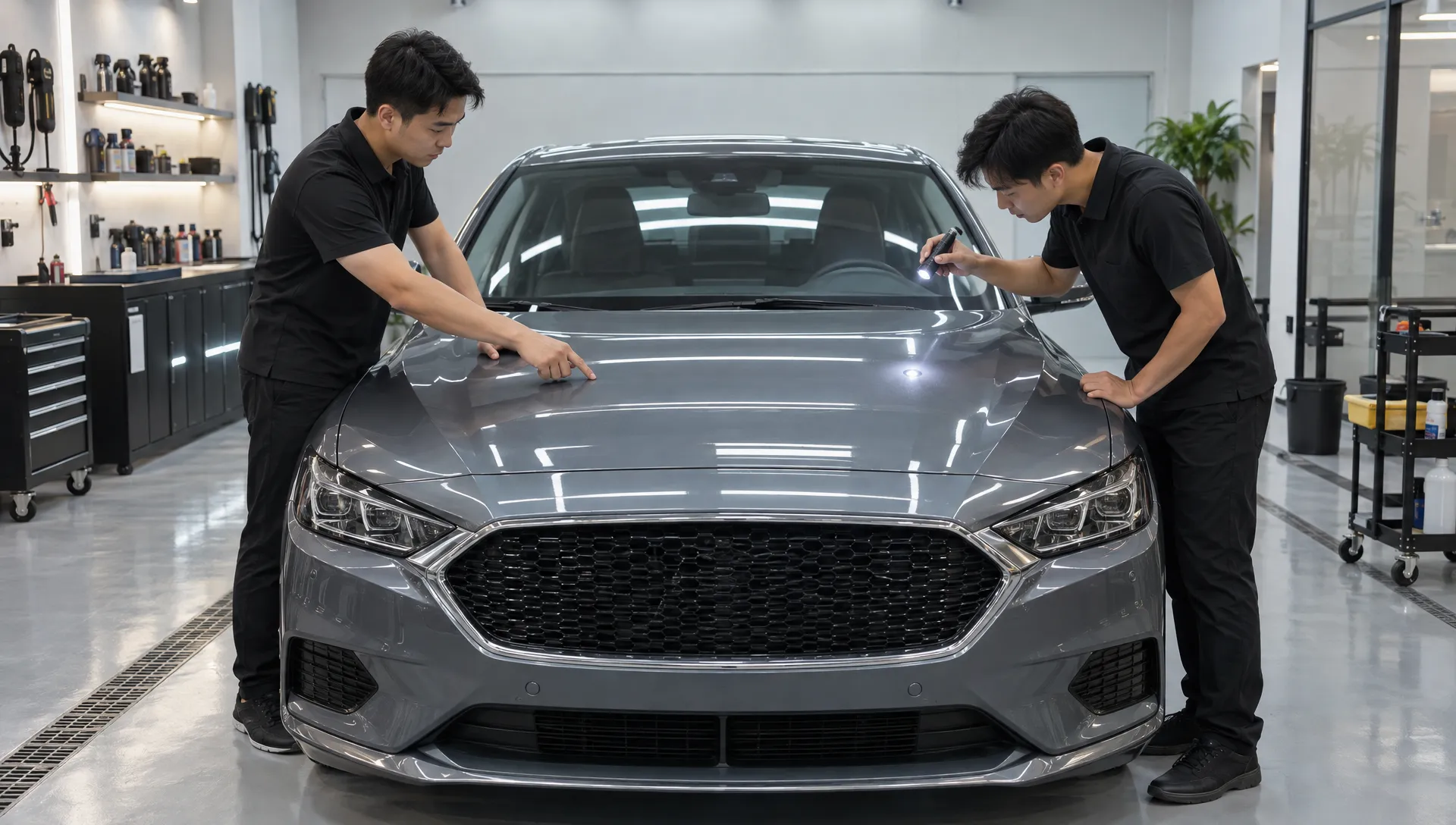
Can Ceramic Coating Prevent Scratches? Know Its Limits
Can Ceramic Coating Prevent Scratches? Know Its Limits
A fresh, glossy finish can make you reluctant to touch your car, especially when every wash seems capable of leaving marks. Professional ceramic coating can make paint easier to maintain and may improve resistance to very light surface marring, but it does not make a car scratch-proof. This guide explains which marks it may help reduce, what hardness ratings actually mean and how to protect your finish without expecting more than a thin coating can deliver.
Can It Actually Prevent Scratches?
No coating can reliably prevent scratches from everyday contact, abrasive dirt or deliberate damage. Scratch resistance means a surface can withstand certain scratching conditions better than another surface. It does not mean scratches cannot occur.
A cured coating forms a thin protective layer over the vehicle’s clear coat. Depending on its formulation, application and curing, it may offer some resistance to minor marring. However, it is not a cushioning layer that absorbs a trolley impact, a stone strike or a key dragged across a door.
Where The Practical Benefit Comes From
The more useful benefit of ceramic coating is often easier cleaning. Its water-repellent surface can help some contamination release more readily during washing, potentially reducing the effort needed to remove it.
That matters because dragging grit across paint is a common route to fine scratches. Easier cleaning can reduce the temptation to scrub, but dirt still needs to be removed safely. Wiping a dusty panel with a dry cloth can damage a coated car just as it can an uncoated one.
What Ceramic Coating Hardness Ratings Mean
A label such as “9H” can sound like a promise of near-indestructible protection. It is not.
In many coating claims, 9H refers to pencil hardness rather than the Mohs mineral-hardness scale. These are different systems, so a 9H claim should not be interpreted as hardness approaching diamond.
The ASTM pencil-hardness test evaluates a coating film’s resistance to scratching or gouging using pencils of specified hardness. It is not a simulation of every hazard your car will encounter.
A meaningful assessment needs the test method, substrate, film preparation and curing conditions. A rating alone does not tell you whether a finish will withstand a grit-filled wash mitt, a sharp object or repeated abrasive cleaning.
Hardness is only one property. Adhesion, flexibility, thickness and the force and shape of the contacting object also affect damage. Ask an installer what evidence supports a hardness claim rather than treating the number as a scratch-proof guarantee.
Which Scratches Remain A Risk?
Different marks involve different forces. A light haze from washing is not the same problem as a deep line through the clear coat.
| Type Of Mark Or Damage | Realistic Expectation |
|---|---|
| Very light wash marring | Some formulations may improve resistance, but dirty tools can still cause marks |
| Swirl marks from abrasive washing | Still possible, particularly when grit is dragged over the surface |
| Scratches from bags, jewellery or branches | Protection is uncertain and depends on the object, pressure and contact |
| Key scratches or deep gouges | Not reliably prevented |
| Stone chips and impact damage | A thin coating does not provide meaningful impact cushioning |
| Existing scratches | Application does not repair damaged clear coat |
For ceramic coating, the sensible expectation is help with surface protection and maintenance, not immunity from physical damage.
The table also explains why “my car is coated” should never become permission to use a rough sponge or wipe away sand. Even a relatively hard surface can be scratched when a sufficiently abrasive particle is pressed across it.
How To Reduce Scratch Risk
Control Contact With Dirty Paint
In Singapore, rain does not leave a car clean. Road spray can deposit grit on lower doors and bumpers, while sheltered parking still exposes paint to dust. Treat a visibly dirty surface as abrasive until it has been properly cleaned.
Focus on these practical habits:
Avoid dry wiping: Do not rub dust or bird droppings away with a tissue, sleeve or dry cloth.
Remove loose grit first: Rinse before contact washing rather than pushing debris around the panel.
Keep cleaning tools clean: Replace a dropped cloth or mitt before it touches the paint again.
Reduce unnecessary contact: Keep bags, shopping baskets and other objects off the bonnet and roof.
Ceramic coating cannot compensate for abrasive washing. If maintaining gloss is your priority, careful contact matters more than assuming the protective layer will take the damage. Follow a washing method suited to a coated car rather than experimenting with aggressive cleaning tools.
Follow The Specified Curing Instructions
After application, follow the installer’s instructions on washing, water exposure and curing. Requirements vary by product and application conditions, so a generic waiting period is not a substitute for the instructions supplied with your treatment.
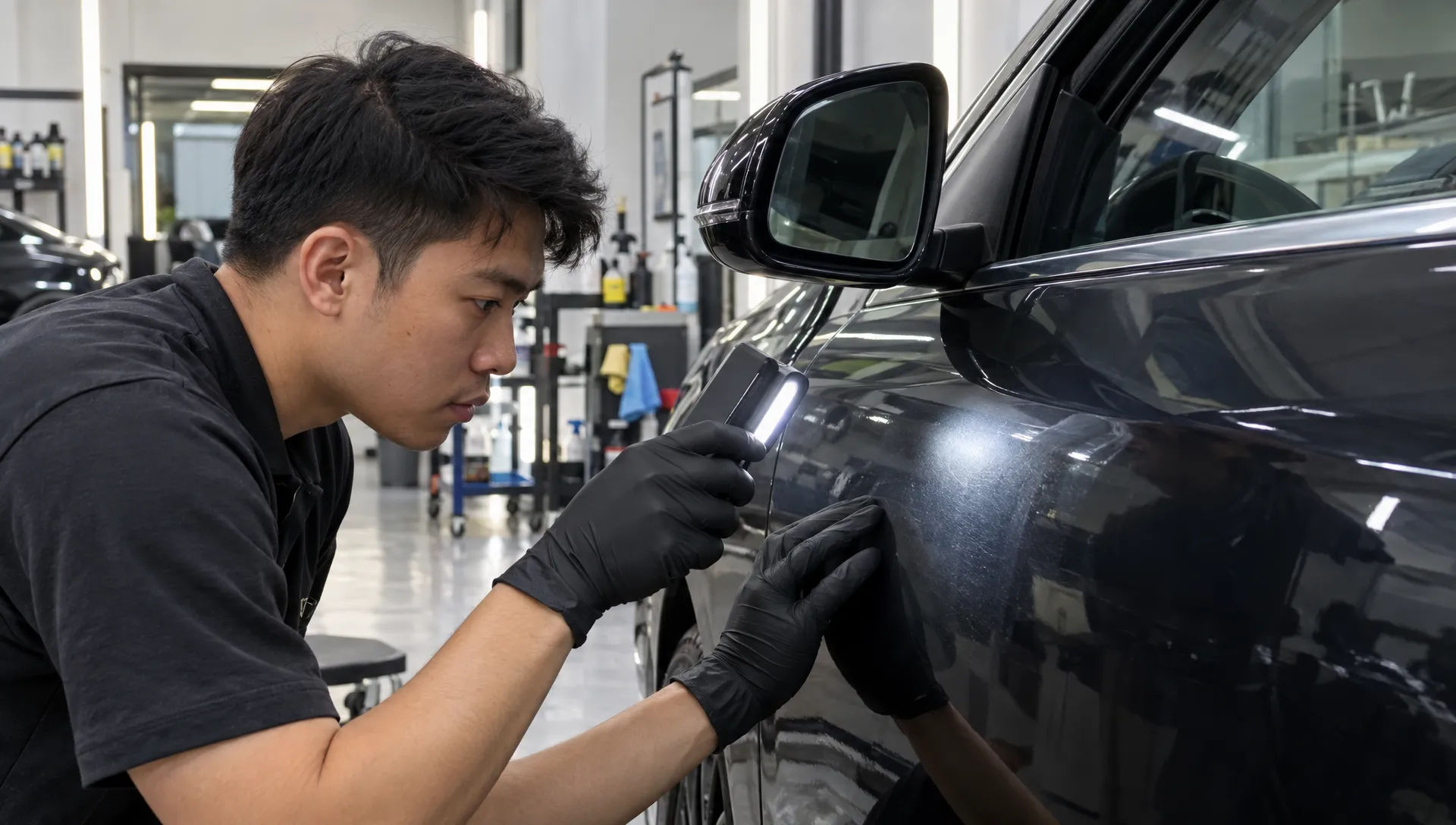
What To Do When You Notice A Scratch
First, avoid repeatedly rubbing the mark to see whether it disappears. A paint transfer mark, mineral deposit and actual scratch can look similar at a glance, but they need different treatment.
Have the area safely cleaned and inspected under suitable lighting. Appearance alone cannot reliably tell you whether a mark is confined to the coating or extends into the clear coat.
Do not immediately reach for cutting compound or an abrasive scratch remover. Polishing can reduce or remove ceramic coating in the treated area, and a deeper defect may require a different repair approach. An inspection should establish what is damaged before deciding what to remove.
If marks were present before application, they were not repaired by adding a protective layer. Understanding when paint correction is needed before coating helps separate preparation work from the protection applied afterwards.
Frequently Asked Questions
Will More Layers Make My Car Scratch-Proof?
No. Additional layers do not turn a thin surface treatment into armour. Layer count alone is not evidence of real-world scratch protection. Evaluate the product’s documented capabilities, application requirements and limitations instead.
Does Water Beading Prove Scratch Resistance?
No. Beading shows water-repellent behaviour, not resistance to mechanical damage. A panel can bead water and still have swirl marks. Equally, a change in beading does not identify whether a scratch has penetrated the coating.
Can A Coated Car Still Develop Swirl Marks?
Yes. Ceramic coating can still develop or allow visible wash-related marring. Swirls commonly become noticeable under direct sunlight or inspection lighting. Clean washing tools and minimal abrasive contact remain necessary throughout the coating’s life.
Will Scratches Heal By Themselves?
Do not assume they will. Self-healing is a specific material property, not a standard feature of every coating. Unless the exact product has a documented capability under defined conditions, treat a visible scratch as damage that needs assessment.
Protect Your Car’s Paint With Realistic Expectations
Scratch resistance is a limited benefit, not a promise that your paint cannot be damaged. Hardness ratings do not predict every real-world encounter, and careful washing remains essential even after professional application.
Before booking, ask Ceramic Works for a no-obligation quote and a clear explanation of what its KubeBond treatment can and cannot protect against. Choose it for realistic surface-protection and maintenance benefits, not an expectation of scratch-proof paint.