
How to Wash a Car With Ceramic Coating Without Damaging It
Ceramic coating makes a car easier to wash, not impossible to damage. The coating adds a hard, hydrophobic layer over the paint, so dirt does not cling as stubbornly and water beads more easily. But if you drag grit across the surface, use harsh cleaners or dry the car badly, you can still create swirl marks, water spots and dull patches.
For Singapore drivers, this matters even more. Heat, sudden rain, bird droppings, construction dust and mineral-rich water can build up quickly on a daily driven car. A safe car wash with ceramic coating is less about scrubbing harder and more about reducing friction at every stage.
Below is a practical, owner-friendly routine you can follow at home or use to judge whether a car wash service is treating your coated paint properly.
First, understand what ceramic coating can and cannot do
A ceramic coating is designed to protect the clear coat from everyday contamination, UV exposure, light chemical staining and weathering. It also gives the car a deep gloss and that satisfying water-beading effect many owners love.
Ceramic Works specialises in KubeBond nano ceramic coating, which is used to help protect paint from UV rays, contaminants, minor scratches and weathering while keeping a glossy finish. If you are still deciding whether coating is worth it for your vehicle, this guide to ceramic coating benefits for Singapore car owners explains the value in more detail.
Still, ceramic coating is not a force field. It does not stop scratches from careless washing, it does not remove existing paint defects and it does not mean you can leave the car dirty for months. If the paint had swirls or water marks before coating, those marks can become locked under the coating unless they are corrected first. That is why some cars need paint correction before ceramic coating, especially if the paint is already dull or scratched.
The safest mindset is simple: treat the coating as a premium protective layer that rewards gentle maintenance.
Before the first wash after ceramic coating
If your car was recently coated, ask your detailer how long you should wait before washing. Fresh ceramic coating needs time to cure, and the exact aftercare window depends on the product, application conditions and package used.
During the early curing period, avoid unnecessary washing, polishing, waxing or chemical cleaners. If rainwater or dust lands on the car, do not panic and do not rub the surface dry with a random cloth. If needed, lightly rinse the car and dry it with clean, plush microfiber towels only if your installer says it is safe.
For new car owners in Singapore, this is also the best time to understand what package you have. Some coatings are single-layer protection, some are multi-layer systems and some packages include maintenance guidance. If you are comparing options, Ceramic Works has a helpful article on how to choose the right ceramic coating package in Singapore.
What you need for a safe car wash with ceramic coating
You do not need a complicated detailing setup. You need clean tools, the right shampoo and a process that prevents dirt from being dragged across the paint.
The essentials are:
- pH-neutral car shampoo made for automotive paint
- two buckets, ideally with grit guards
- a clean microfiber wash mitt
- separate wheel brushes or mitts for rims and tyres
- a plush microfiber drying towel or car blower
- clean microfiber cloths for door jambs and small areas
- optional pressure washer or foam cannon for pre-rinsing
Avoid household dishwashing liquid. It is not designed for coated car paint and can strip oils, affect slickness and leave the surface feeling grabby. Also avoid strong degreasers unless your detailer specifically recommends one for a particular area.
| Washing item or habit | Safe for coated paint | Avoid on ceramic coating |
|---|---|---|
| Shampoo | pH-neutral car shampoo | Dish soap, harsh degreaser, abrasive cleaner |
| Wash tool | Soft microfiber mitt | Kitchen sponge, stiff brush, old towel |
| Drying | Plush microfiber towel or blower | Letting water dry in the sun, rough chamois |
| Car wash type | Touchless or careful hand wash | Automatic brush wash |
| Maintenance | Coating-safe topper if recommended | Cleaner wax, polish or compound unless professionally advised |
Step-by-step: how to wash a ceramic coated car safely
The goal is to remove dirt before you touch the paint, then keep your wash mitt as clean as possible. This is the routine most careful owners should follow.
1. Wash in the shade on cool panels
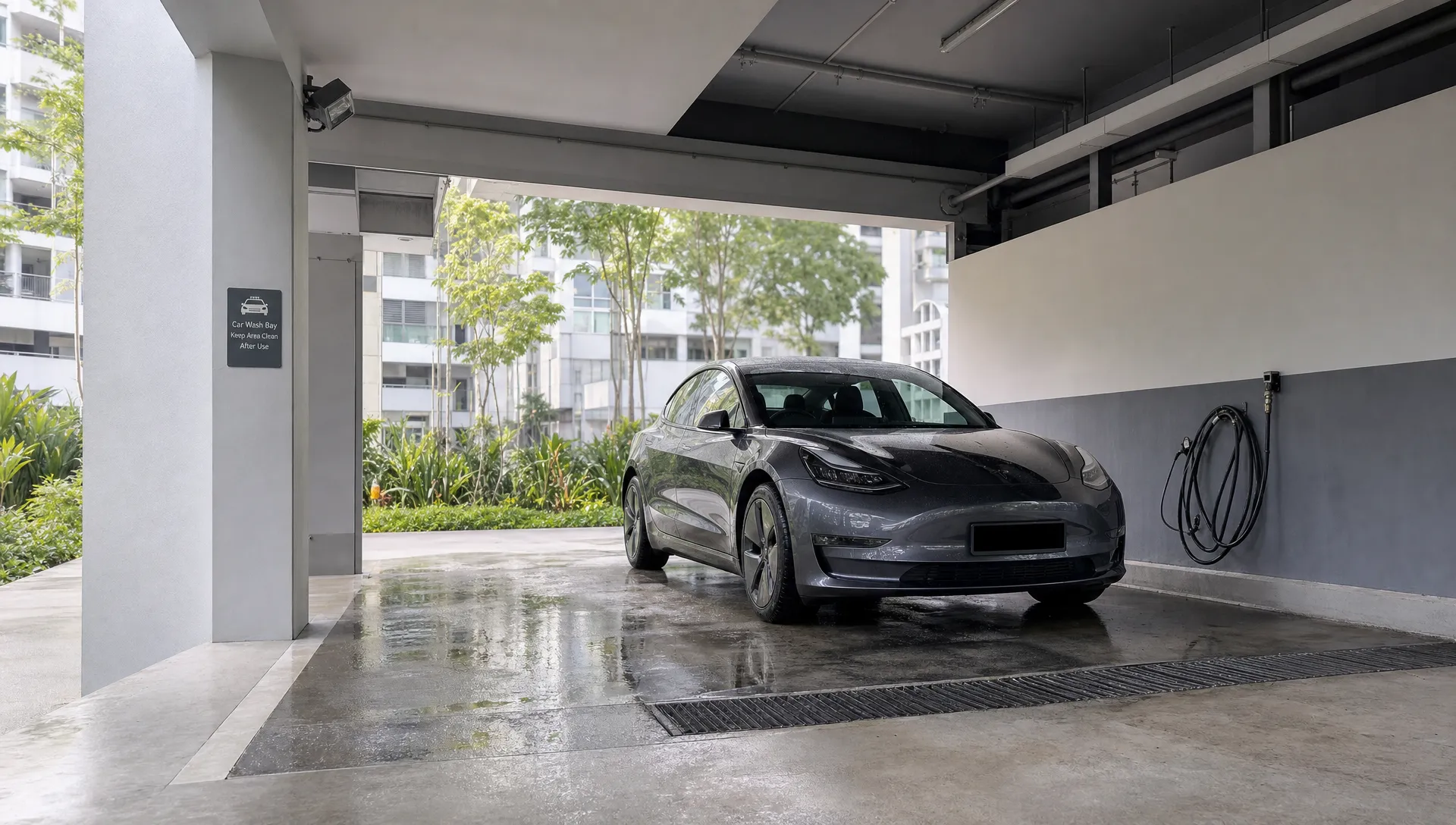
Never wash a hot car under direct afternoon sun. In Singapore, bonnet and roof panels can heat up quickly, even in a car park with partial shade. Hot panels cause shampoo and water to dry too fast, which increases the risk of water spots and streaks.
Choose a shaded washing bay, a sheltered area or a cooler time of day. Morning or late afternoon is usually safer than midday.
2. Rinse thoroughly before touching the paint
Start with a full rinse from top to bottom. This removes loose sand, dust and grit before your mitt touches the surface. Pay attention to lower doors, the rear bumper, wheel arches and areas behind the tyres because these collect the most road grime.
If you have access to a pressure washer, use it at a sensible distance. You want to flush contamination away, not blast trim, badges or edges aggressively.
3. Pre-wash with foam if possible
A foam pre-wash helps soften traffic film and lifts dirt away from the coating. Let the foam dwell for a few minutes, but do not allow it to dry. Then rinse it off completely.
This step is especially useful after rainy drives, expressway use or parking near trees. It reduces the amount of dirt left for the contact wash.
4. Clean wheels with separate tools
Wheels carry brake dust, tyre grime and road contaminants. Do not use the same mitt on your wheels and paintwork. Even one careless pass can transfer abrasive particles onto the coated panels.
Clean the wheels first or last, depending on your preference, but always keep the tools separate. If you use a wheel cleaner, make sure it is safe for your wheel finish and avoid unnecessary overspray onto coated paint.
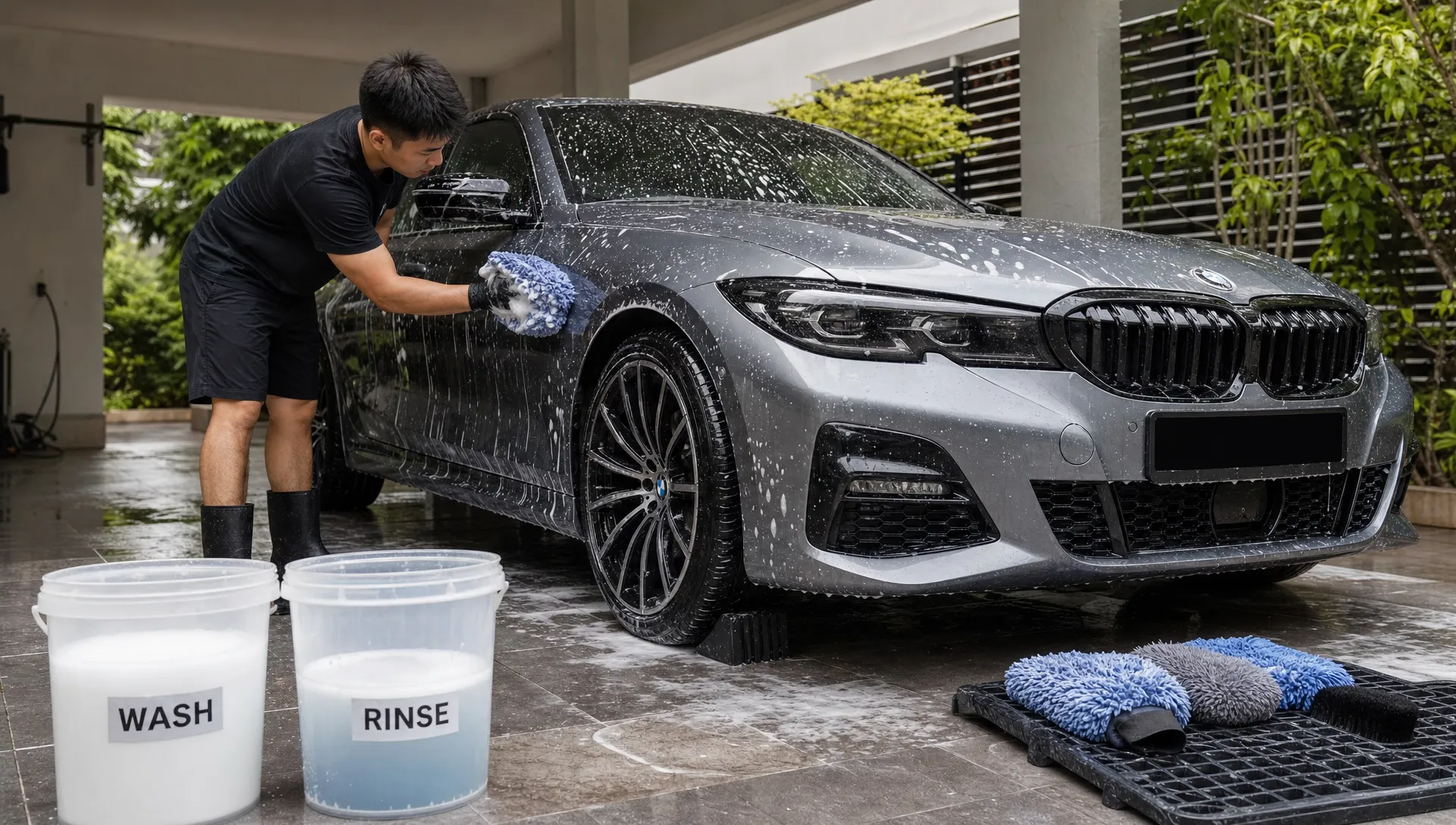
5. Use the two-bucket method for contact washing
Fill one bucket with shampoo solution and one with clean rinse water. Soak your microfiber mitt in the shampoo bucket, wash a small section, then rinse the mitt in the clean water bucket before taking more shampoo.
Work from the cleanest areas to the dirtiest areas. Start with the roof, glass and upper panels, then move to the bonnet, boot, upper doors and lower panels. Use straight, gentle passes rather than circular scrubbing.
If the mitt feels gritty, stop and rinse it thoroughly. The coating may be scratch resistant, but dragging dirt across it can still mark the surface.
6. Rinse from top to bottom
After washing, rinse thoroughly so no shampoo remains in panel gaps, mirrors, badges or door handles. A ceramic coated car should release water more easily than unprotected paint, but trapped shampoo can still leave residue if it dries.
Watch how the water behaves. Strong beading and sheeting usually mean the coating is clean and active. If water sits flat in certain areas, the surface may be contaminated, not necessarily failed.
7. Dry immediately with clean microfiber
Drying is where many swirl marks and water spots happen. Do not let the car air-dry, especially in warm Singapore weather. Minerals in water can remain on the surface after the water evaporates, leaving stubborn marks.
Use a large plush drying towel and blot or gently glide across the paint. A car blower is even better for mirrors, grilles, emblems and panel gaps because it reduces towel contact. If you use a drying aid, choose one that is coating-safe and compatible with your ceramic coating.
How often should you wash a ceramic coated car in Singapore?
A ceramic coated car does not need aggressive washing, but it still needs regular cleaning. The right schedule depends on where you park, how often you drive and what the car is exposed to.
| Driving or parking condition | Suggested wash routine | Why it matters |
|---|---|---|
| Sheltered parking, light use | Every 2 to 3 weeks | Keeps dust and light grime from bonding |
| Daily driving, open-air parking | Weekly or every 2 weeks | Removes rain residue, traffic film and bird droppings |
| After bird droppings or tree sap | Rinse or clean as soon as possible | Organic acids can stain if left too long |
| After heavy rain and road spray | Wash within a few days if dirty | Prevents grime from drying on lower panels |
| After construction dust exposure | Pre-rinse before any wiping | Fine dust can scratch when dragged |
If you are busy, it is better to do a careful wash less often than a rough wash every few days. Poor washing causes more visible damage than normal dirt sitting for a short time.
Common mistakes that damage ceramic coating
Most coating damage does not come from the shampoo itself. It comes from friction, heat, harsh chemicals and contaminated towels.
Using automatic brush washes
Automatic brush washes are convenient, but the brushes can carry dirt from previous cars. That dirt can create fine swirls on coated paint. If you must use a commercial car wash, choose a touchless option or a hand wash service that understands coated vehicles.
Dry wiping dust
A dry microfiber towel may feel soft, but if the car is dusty, the towel pushes dirt across the paint. This is one of the fastest ways to create fine scratches. Always rinse first or use a proper waterless wash product only when the car is lightly dusty and the product is suitable for coatings.
Washing under direct sun
Heat causes soap and water to dry before you can rinse or towel them away. This can leave streaks, mineral deposits and water spots. The coating may resist staining better than bare paint, but repeated poor washing still reduces gloss.
Using polish or compound as maintenance
Polish and compound are abrasive. They are used to level paint defects, not to maintain a healthy ceramic coating. If you polish a coated panel, you may reduce or remove the coating in that area. Save polishing for professional correction work.
Claying too often
Clay bars can remove bonded contamination, but they can also mar the paint or affect the coating surface when used aggressively. If your coated car feels rough after washing, consider a professional maintenance wash or decontamination service instead of claying it repeatedly at home.
What if the coating stops beading?
Weak water beading does not always mean the coating is gone. Often, the surface is clogged with traffic film, mineral deposits or residue from the wrong shampoo. A careful wash may restore some water behaviour. If not, the car may need chemical decontamination or a coating-safe maintenance treatment.
Signs that the coating needs attention include reduced slickness, patchy water behaviour, dirt sticking more easily, dullness after washing or water spots that keep returning. If only one area is affected, such as the bonnet or roof, that panel may be exposed to more heat, sun or standing water.
This is where a professional inspection helps. A trained detailer can tell whether the coating is contaminated, weakened or physically damaged. The answer is not always to recoat the whole car. Sometimes a maintenance wash is enough. Sometimes paint correction and recoating are needed for selected panels.
Should you add wax on top of ceramic coating?
In most cases, you do not need traditional wax on top of ceramic coating. Wax can temporarily change the feel and water behaviour, but it may also mask the coating properties or attract residue depending on the product.
If you want to boost slickness or gloss, use a topper or spray sealant that is designed to work with ceramic coatings. Better still, ask your coating installer what they recommend for your specific coating. Mixing random products can make maintenance harder because you will not know whether the coating, topper or residue is causing the change in behaviour.
Quick checklist for every wash
Use this short checklist before you start:
- The car is parked in shade and the panels are cool
- You have rinsed away loose dirt before touching the paint
- Your shampoo is pH-neutral and automotive-safe
- Your wash mitt and drying towels are clean
- Wheel tools are separate from paint tools
- You dry the car fully before water spots form
A proper car wash with ceramic coating should feel smooth, controlled and gentle. If you find yourself scrubbing hard, something is wrong. Either the contamination needs more pre-wash time or the car needs professional decontamination.
Frequently Asked Questions
Can I wash my car normally after ceramic coating? You can wash it regularly, but not carelessly. Use pH-neutral shampoo, clean microfiber tools and a gentle hand wash method. Avoid automatic brush washes, harsh detergents and dry wiping.
How long should I wait before washing a newly ceramic coated car? Follow the curing instructions from your installer because different coatings and conditions vary. Many professional coatings need several days before the first proper wash, and early aftercare affects long-term performance.
Is pressure washing safe for ceramic coating? Yes, when used sensibly. Keep a safe distance from the paint, avoid blasting edges or badges at close range and use pressure washing mainly to rinse away loose dirt before contact washing.
Can I use a waterless wash on ceramic coating? You can use a coating-safe waterless wash only when the car is lightly dusty. If the car has sand, mud, road grime or construction dust, rinse it first to avoid scratching.
Why does my ceramic coated car still get water spots? Ceramic coating improves resistance, but it cannot stop minerals from drying on the surface. Dry the car immediately after washing or rain exposure when possible, especially under hot sun.
Do I need professional maintenance for ceramic coating? It is a good idea if the car feels rough, has weak beading or shows stubborn water marks after a normal wash. Professional maintenance can remove contamination safely without unnecessary polishing.
Keep your coated car glossy with the right aftercare
Ceramic coating gives your car a stronger, glossier and easier-to-clean finish, but the wash routine still matters. Gentle washing protects the coating, preserves gloss and keeps the paint looking fresh for longer.
If you want professional help with ceramic coating, detailing or coating maintenance in Singapore, Ceramic Works provides KubeBond nano ceramic coating and certified application by trained detailers. You can request a free quote and get advice based on your car, paint condition and driving habits.