
Do You Need Ceramic Glass Coating for Your Car?
If you have just collected a new car, repainted an older one or finally decided to take better care of your paintwork, ceramic glass coating for cars is probably on your shortlist. It promises deeper gloss, easier washing and better resistance against Singapore’s sun, rain and road grime. The real question is not whether it works, but whether it fits the way you use and maintain your car.
For many owners, the answer is yes. A properly applied ceramic coating can be a practical layer of protection for daily driving in Singapore, where cars face intense UV exposure, frequent showers, tree sap, bird droppings, construction dust and tight car park spaces. But it is not a force field, and it does not remove the need for washing or sensible care.
This guide breaks down what ceramic glass coating does, who benefits most, when you may not need it and what to check before booking an appointment.
What is ceramic glass coating for cars?
Ceramic glass coating is a liquid protective coating applied to a car’s painted surfaces. Most professional coatings are based on silica or ceramic compounds that cure into a hard, transparent layer over the clear coat. Once bonded, the coating helps create a slick surface that is more resistant to water, dirt, chemical contaminants and UV damage than unprotected paint.
The word “glass” can be confusing. It does not mean a sheet of glass is placed on the car. In detailing language, it usually refers to a silica-based coating that forms a glass-like finish, with high gloss and strong water beading.
A professional ceramic coating is different from wax or sealant. Wax sits on the surface and usually needs frequent reapplication. A ceramic coating bonds more durably to the paint, which is why it can last much longer when applied and maintained correctly.
What does ceramic glass coating actually do?
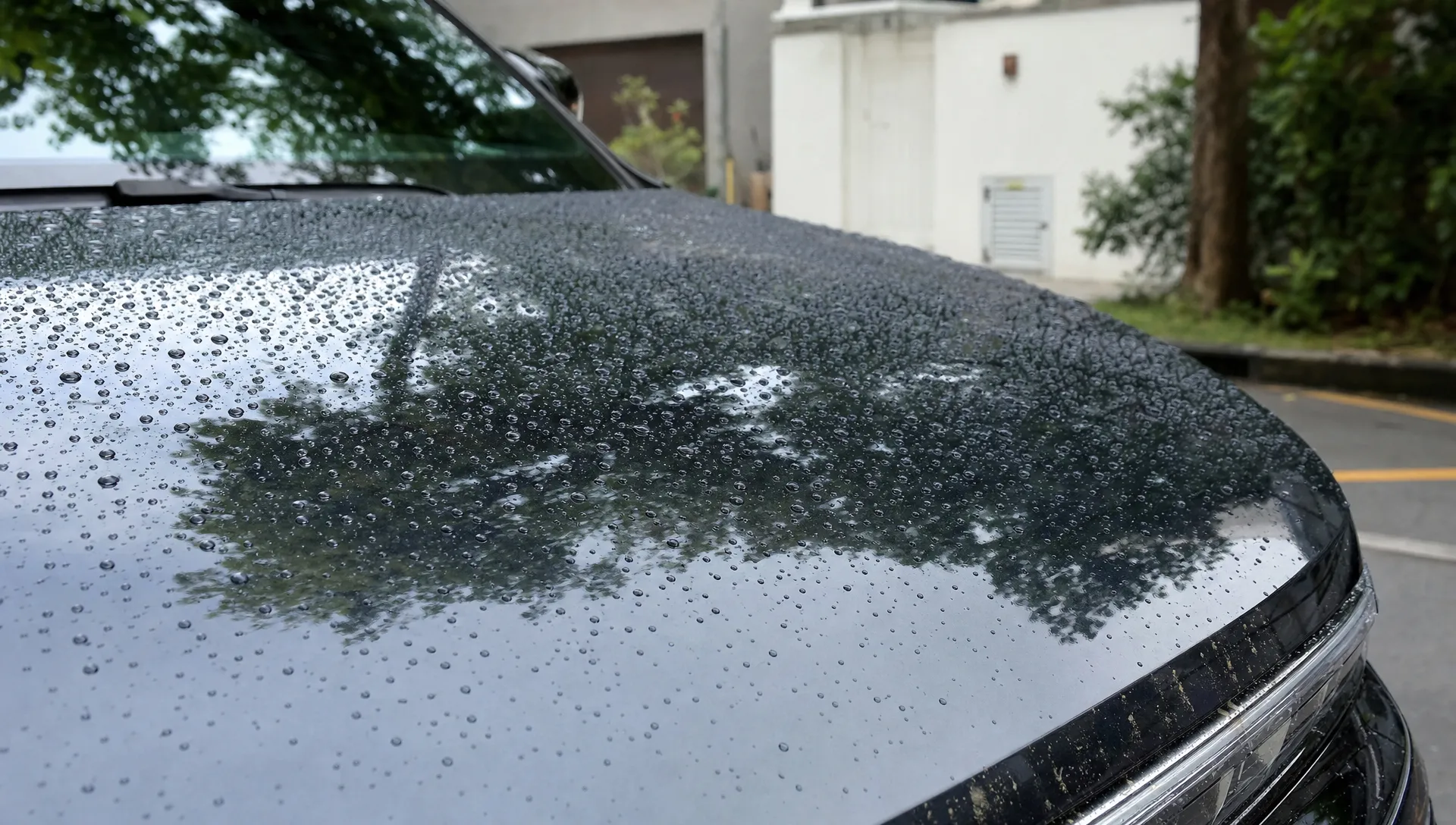
A good coating improves both appearance and maintenance. It can make paint look glossier because the surface becomes smoother and more reflective. It also helps water bead and sheet off the car, which reduces how strongly dirt clings to the paint.
In Singapore, these benefits are especially useful because cars are exposed to a mix of tropical weather and urban contaminants. Sunlight can fade and oxidise paint over time, especially on horizontal panels like the bonnet, roof and boot. Rainwater can leave mineral deposits if it dries on the surface. Bird droppings and tree sap can stain or etch the clear coat if ignored. Ceramic coating gives your paint a better chance against these everyday problems.
That said, the coating is a protective layer, not a repair treatment. It does not hide deep scratches, fix stone chips or make your car immune to poor washing. If your paint already has swirl marks, oxidation or water spots, those defects may still be visible after coating unless the surface is corrected first. If you are unsure about your paint condition, this guide on when your car needs paint correction before ceramic coating explains the signs to look for.
Ceramic glass coating is useful in Singapore for several reasons
Singapore’s climate is tough on car paint even if your mileage is low. A car that sits outdoors in an open car park can age quickly because of heat, humidity and UV exposure. The National Environment Agency’s UV Index information regularly shows why sun protection matters in Singapore’s conditions.
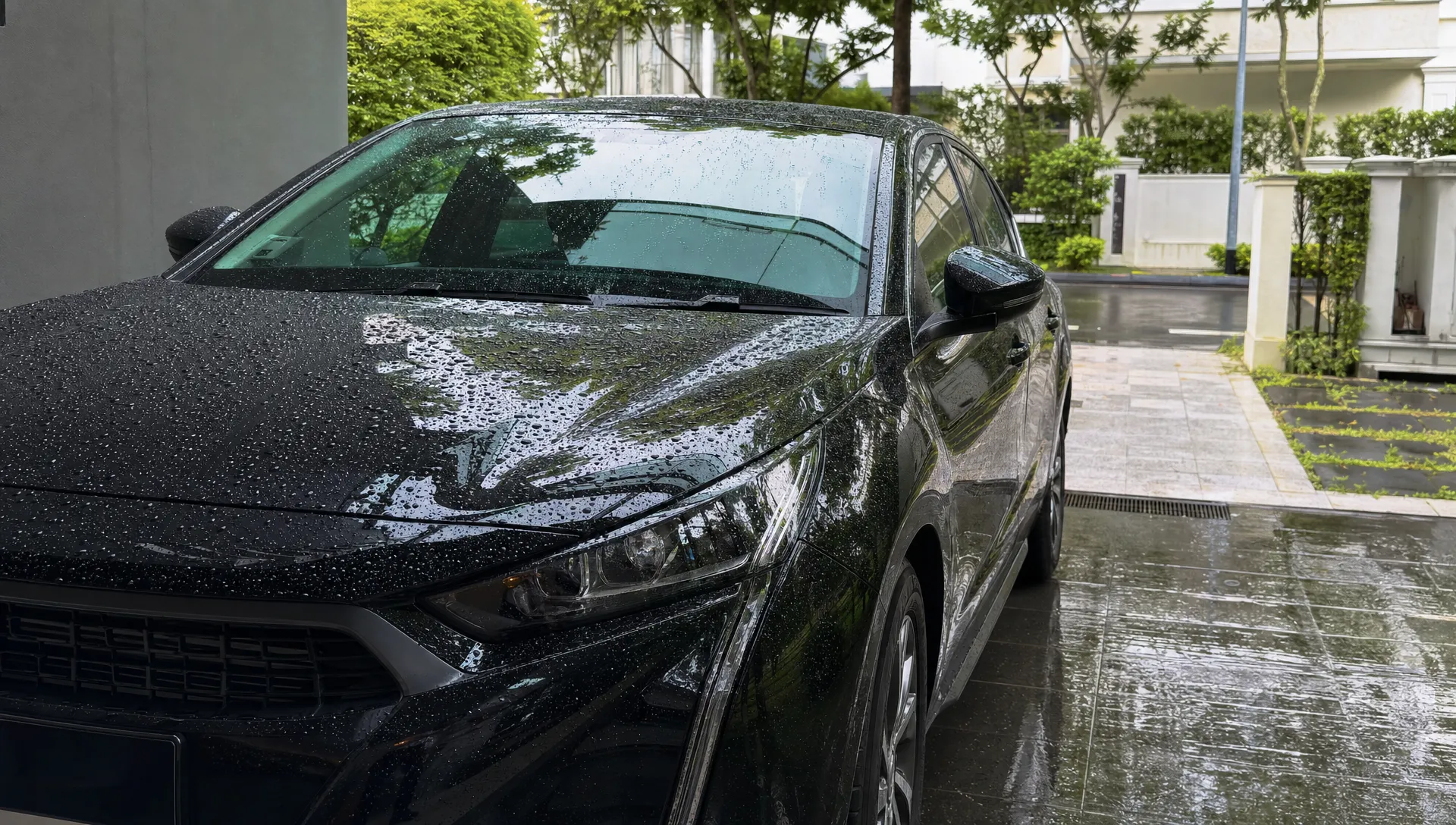
Rain is another factor. Short, heavy showers leave water behind, and that water often mixes with dust or pollutants before drying on the paint. Over time, this can cause dullness and spotting. Ceramic coating does not prevent rain from touching the car, but its hydrophobic surface makes it easier for water to roll off and easier for you to wash away residue.
Urban driving also adds contamination. Brake dust, road film, oily residue, tree sap, insect marks and construction dust can cling to paint. A coated surface is generally easier to clean because contaminants have a harder time bonding directly to the clear coat.
Do you need it if your car is new?
New car owners are often the best candidates for ceramic glass coating because the paint is still in good condition. Protecting the surface early helps preserve the fresh gloss and reduces the risk of contaminants bonding directly to the clear coat.
However, “new” does not always mean defect-free. Cars can pick up light scratches during transport, pre-delivery washing or showroom handling. Before coating, a detailer should inspect the paint under proper lighting. Minor polishing may be recommended if there are fine swirls or water marks.
If you plan to keep the car for several years, coating it early is usually more sensible than waiting until the paint looks tired. Once clear coat damage, etching or oxidation sets in, more correction work may be needed before the car can achieve the same finish.
Do you need it if your car is older?
An older car can still benefit from ceramic coating, especially if the paint is structurally healthy. The key is preparation. If the car has dull paint, swirl marks or stubborn stains, the coating should not be applied directly over those imperfections without proper assessment.
For older vehicles, ceramic coating is most worthwhile when paired with detailing and paint correction. The correction stage improves the finish, and the coating helps protect that restored gloss. Without preparation, the coating may seal in existing defects and leave you disappointed with the final look.
This is also where expectations matter. If the car has deep scratches that go through the clear coat, ceramic coating cannot fill them permanently. Those may need repainting, touch-up work or paint protection film depending on severity and location.
Ceramic coating compared with wax, sealant and PPF
Car owners often compare ceramic coating with wax, paint sealant and paint protection film. They are related, but they solve different problems.
| Option | Best for | Main limitation |
|---|---|---|
| Wax | Short-term shine and basic water beading | Wears off quickly in heat and rain |
| Paint sealant | Longer protection than wax with easy application | Usually less durable than professional ceramic coating |
| Ceramic coating | Gloss, easier washing, UV and contaminant resistance | Does not stop stone chips or deep scratches |
| Paint protection film | Physical impact protection on high-risk panels | Higher cost and different appearance considerations |
If you mainly want easier washing and longer-lasting gloss, ceramic coating is a strong option. If you are worried about stone chips on the bonnet, bumper or door edges, paint protection film may be more suitable for those high-impact areas. Some owners combine both: PPF on vulnerable panels and ceramic coating over painted surfaces for gloss and easier maintenance.
For owners comparing coating levels or service options locally, this article on choosing the right ceramic coating package in Singapore can help you understand what to ask before committing.
When ceramic glass coating is worth it
Ceramic glass coating for cars makes the most sense when you care about keeping the paint presentable and you are willing to maintain it properly. It is especially useful if your car is parked outdoors, driven daily or exposed to trees, rain, dust and strong sunlight.
It is also worthwhile for owners who dislike frequent waxing. A professional coating gives you a longer-lasting protective layer, so you are not relying on short-term products every few weeks. You still need to wash the car, but cleaning usually becomes less tiring because dirt releases more easily.
You are likely to benefit if:
- You want your car to stay glossy for longer
- You park outdoors or in partially sheltered areas
- You drive daily in rain, heat and traffic
- You want washing to be easier and faster
- You plan to keep the car for a few years
- You have a new car and want to protect the paint early
For car lovers, the appeal is often visual. A well-prepared and coated car can have a deep, reflective finish that looks freshly detailed after a proper wash. For practical daily drivers, the bigger benefit may be time saved during cleaning and reduced risk of staining from contaminants.
When you may not need ceramic coating
Ceramic coating is not always necessary. If you rarely use the car, keep it in a private sheltered garage and are comfortable waxing it regularly, a simpler protection routine may be enough.
It may also be less suitable if you expect it to prevent every scratch. Coatings can improve resistance to fine marks, but they cannot stop damage from keys, shopping trolleys, careless door contact or abrasive washing. If physical impact is your main concern, PPF should be part of the conversation.
You may want to delay coating if your paint needs repair first. For example, if the car has heavy oxidation, clear coat failure or deep scratches, coating should not be treated as a shortcut. Repair and correction come first, then protection.
What to check before getting ceramic coating
Before booking, ask the detailer how the car will be prepared. The result depends heavily on cleaning, decontamination, polishing and controlled application. A high-quality coating applied over poorly prepared paint will not deliver the finish most owners expect.
You should also ask about curing time, aftercare and maintenance washing. Ceramic coating needs time to bond properly. During the early curing period, the car may need to avoid rain, washing or harsh chemicals depending on the coating system used.
Look for clear explanations rather than vague promises. A professional detailer should be able to explain what the coating protects against, what it does not protect against and how to maintain it. If you are comparing professional coating with quick DIY products, this breakdown of ceramic spray coating versus professional coating is useful.
How to maintain a ceramic coated car
Maintenance is simple, but it matters. The biggest mistake is assuming the coating makes the car maintenance-free. It does not. Dirt, minerals and contaminants can still sit on the surface if the car is neglected for long periods.
A safe wash routine protects both the coating and the paint below. Use a proper car shampoo, clean wash mitts and soft drying towels. Avoid aggressive scrubbing, dirty sponges and automatic brush washes. If bird droppings or tree sap land on the car, remove them as soon as possible because acidic contaminants can still damage surfaces if left too long.
A coated car usually rewards consistency. Regular gentle washing keeps the hydrophobic effect strong and preserves that slick feel. If water beading seems weaker over time, the coating may simply be clogged with road film or mineral deposits rather than gone. A professional maintenance wash can often restore performance.
Professional application matters
The coating itself is only one part of the result. Surface preparation and application skill determine how well it bonds and how good the car looks after curing. Professional detailers use controlled processes to wash, decontaminate, polish and apply the coating evenly.
Ceramic Works provides car paint protection and detailing services in Singapore, specialising in KubeBond nano ceramic coating. The service is positioned around professional application by trained detailers, with related services such as paint protection film, car grooming, solar film and vinyl wrapping available for different protection needs.
For drivers who want a glossy showroom finish with stronger resistance against UV rays, contaminants, scratches and weathering, a professionally installed coating is usually the safer route than trying to correct and coat the paint yourself.
Frequently Asked Questions
Is ceramic glass coating the same as ceramic coating? In most car detailing conversations, yes. “Ceramic glass coating” usually refers to a silica-based or ceramic coating that cures into a transparent, glass-like protective layer on the paint.
Will ceramic coating stop scratches? It can improve resistance to light wash marks and fine surface scratches, but it cannot prevent deep scratches, stone chips or damage from hard impact. Paint protection film is better for physical impact protection.
Can I apply ceramic glass coating on a brand-new car? Yes, and new cars are often good candidates. The paint should still be inspected first because even new cars can have light swirls, water spots or handling marks before delivery.
Does a coated car still need washing? Yes. Ceramic coating makes the car easier to wash, but it does not make it self-cleaning in all conditions. Regular gentle washing helps maintain gloss and hydrophobic performance.
How do I know if my car needs paint correction before coating? If you see swirl marks, dullness, water spots, oxidation or fine scratches under strong light, paint correction may be recommended before coating. A professional inspection is the best way to confirm.
So, do you need ceramic glass coating for your car?
If you want your car to stay glossy, easier to clean and better protected against Singapore’s sun, rain and everyday contaminants, ceramic glass coating is a smart investment. It is especially worthwhile for new car owners, daily drivers and anyone who plans to keep their vehicle looking sharp for the long term.
If your main concern is heavy impact damage, or if your paint already needs repair, coating alone is not the complete answer. The right approach may include paint correction, PPF or a tailored detailing plan before coating.
For a clearer recommendation, speak to Ceramic Works about your car’s condition, parking habits and protection goals. You can request a no-obligation quote through Ceramic Works and find out which paint protection option suits your vehicle best.