
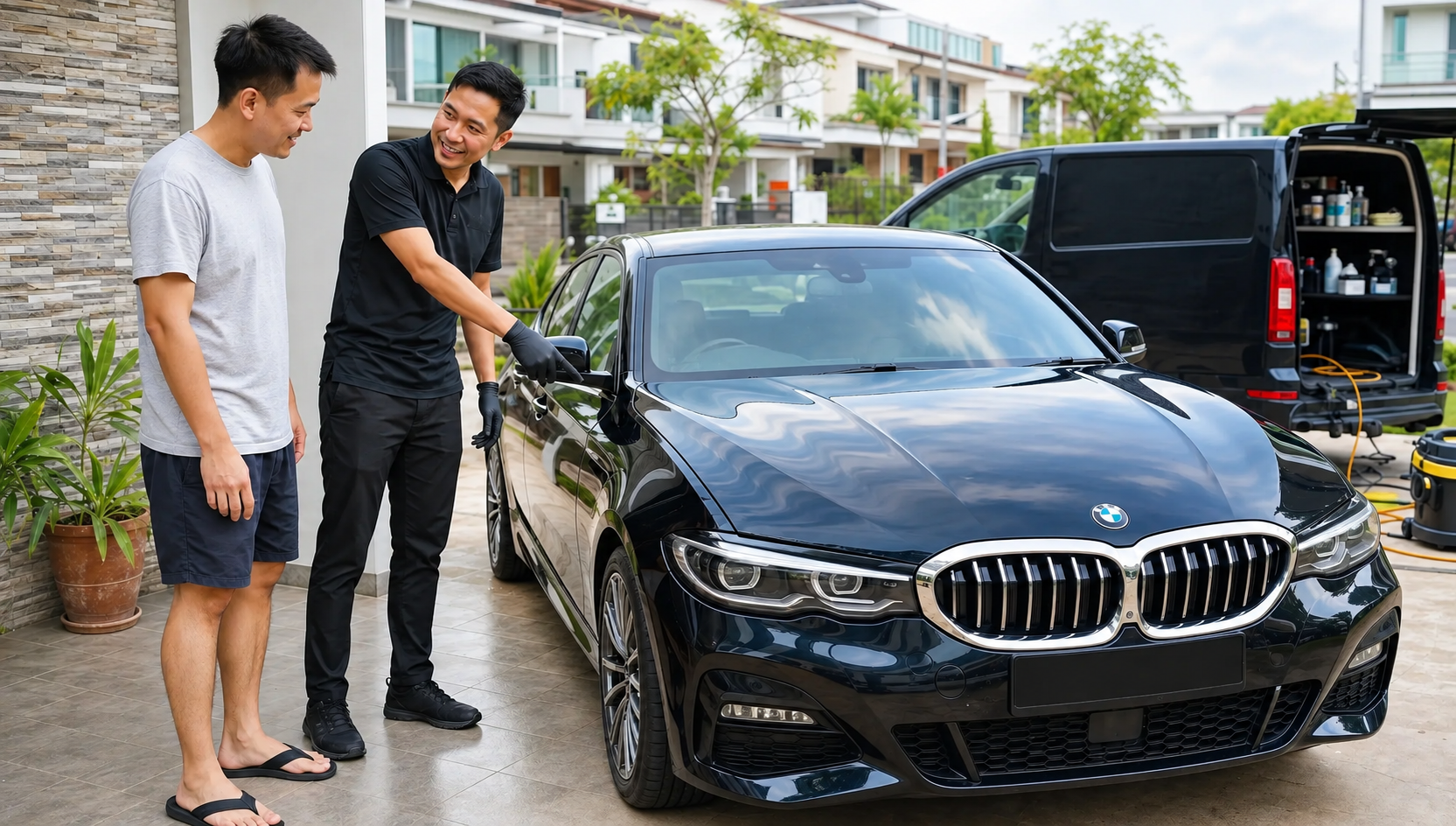
How Car Paint Protection Works in Singapore’s Climate
Searches for “car paint protection singapore” usually come from owners who have seen how quickly a glossy finish can lose its crisp look here. Singapore’s heat, humidity, heavy showers, tree-lined roads, basement car parks and construction dust all work against your paint. Protection is not only about shine. It is about adding a sacrificial layer so contaminants attack the coating or film before they reach the clear coat.
A good protection system also makes daily ownership less frustrating. Rainwater beads away more easily, road grime releases faster during washing and the paint keeps its depth for longer. A practical car paint protection singapore plan has to match local conditions rather than copy what works in a colder, drier country.
Why Singapore’s climate is tough on car paint
Singapore has a warm, humid climate with frequent rainfall throughout the year. It is uniformly warm and humid, with abundant rainfall. For car paint, that means there is rarely a long dry season where the surface gets a break.
Moisture and heat accelerate the way contaminants bond to your paint. After a thunderstorm, minerals in water droplets can dry into water spots. When the sun heats those spots, they can become harder to remove. If bird droppings or tree sap sit on a warm bonnet for hours, their acidic content can mark the clear coat.
For car paint protection in Singapore, the climate matters because paint damage often comes from repeated small exposures rather than one dramatic incident. A car parked outdoors near trees, driven daily through expressway spray and washed with harsh methods can build up dullness, fine swirls and etching long before the owner expects it.
What paint protection is actually protecting
Modern car paint usually has multiple layers: primer, colour coat and clear coat. The clear coat is the glossy outer layer you see and touch. It gives the paint depth, but it is not invincible. UV exposure, grit, acidic residue and improper washing gradually reduce its clarity.
Paint protection adds a barrier over that clear coat. Ceramic coating forms a hard, slick and hydrophobic surface. Paint protection film, often called PPF, adds a thicker physical film that can absorb more direct impact. Wax and sealants sit on top too, but they generally do not last as long in tropical daily use.
When you compare car paint protection Singapore options, the main question is what type of risk you want to reduce. A ceramic coating is excellent for gloss, easier washing and resistance to environmental contaminants. PPF is better suited to areas vulnerable to stone chips, scratches and abrasion, such as bumpers, door edges and side mirrors.
| Local paint threat | What it can do | Useful protection |
|---|---|---|
| Strong sun and UV | Fading, oxidation and loss of gloss | Ceramic coating, regular maintenance |
| Heavy rain and water minerals | Water spots and staining | Hydrophobic ceramic coating |
| Bird droppings and tree sap | Etching if left too long | Ceramic coating with prompt cleaning |
| Road grit and expressway debris | Chips and abrasion | PPF on high-impact panels |
| Poor washing technique | Swirls and fine scratches | Proper wash method, quality towels and coating maintenance |
How car paint protection Singapore works beneath the gloss
Ceramic coating is often described as a glass-like layer, but it is better understood as a bonded protective surface. Professional coatings are applied to prepared paint, then allowed to cure so the coating can bond properly. Once cured, the coating becomes slicker and more resistant to everyday contamination than bare clear coat.
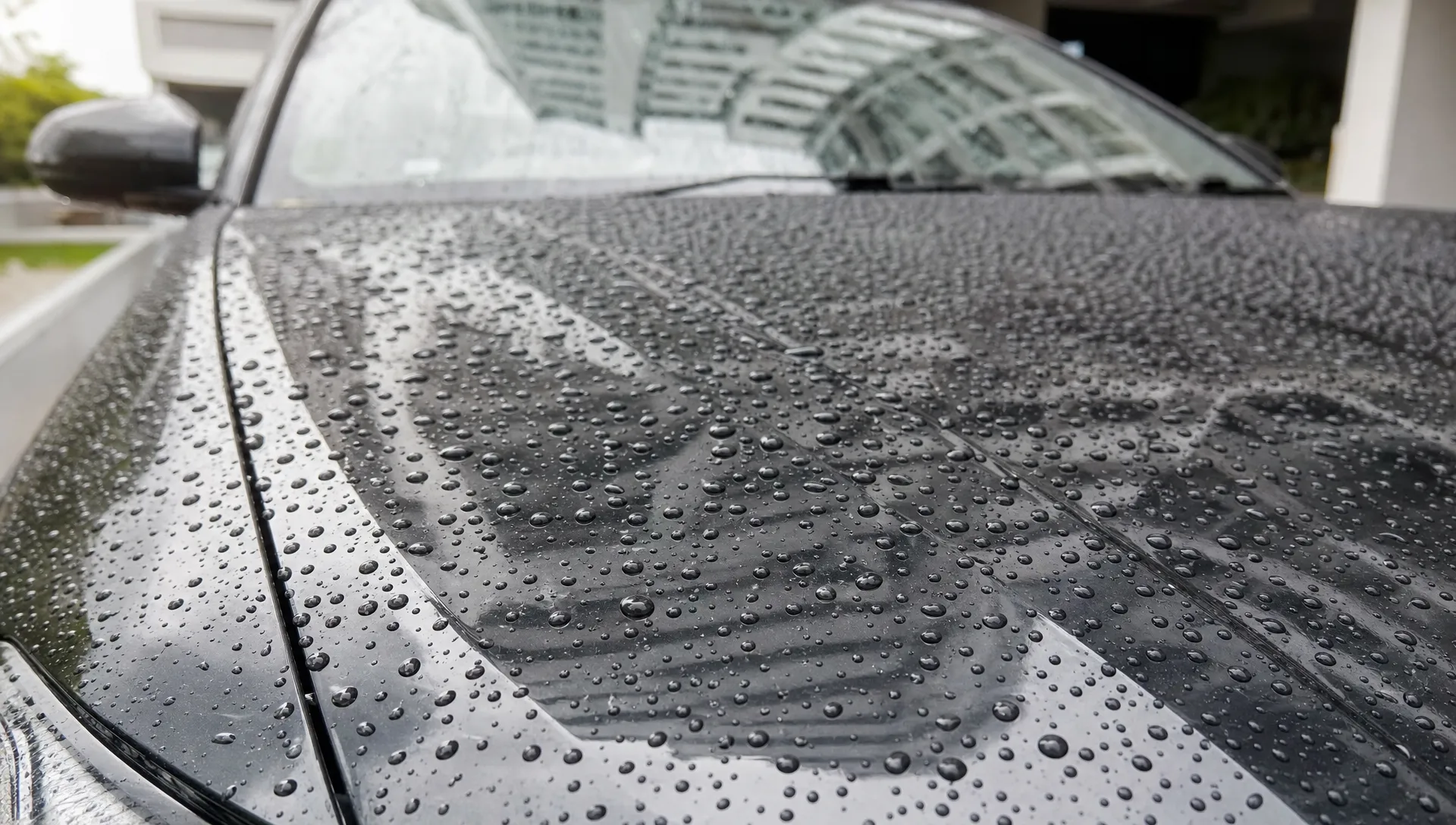
The hydrophobic effect is the most visible part. Water forms beads or sheets off the panel, which reduces the amount of dirt left behind after rain. This does not mean the car becomes self-cleaning in a literal sense. It means dirt clings less stubbornly, so washing is faster and safer when done properly.
Professional preparation is what separates a durable result from a short-lived shine. Before coating, detailers typically wash, decontaminate and polish the paint to reduce bonded dirt, oxidation and swirl marks. If defects are left underneath, the coating may preserve those defects rather than hide them.
Ceramic coating, PPF, wax and sealant: what changes?
Car owners often group every glossy product under “paint protection”, but the products work differently. Wax gives warmth and shine, yet Singapore’s heat and rain can wear it down quickly. Synthetic sealants usually last longer than wax. Professional ceramic coating offers a tougher, more durable surface with stronger water behaviour.
For most owners researching car paint protection in Singapore, ceramic coating is the balanced choice because it improves gloss, cleaning and contaminant resistance without changing the look of the car. Ceramic Works uses KubeBond nano ceramic coating, applied by trained detailers, for owners who want a professional finish rather than a quick spray-on product.
PPF serves a different role. It is a transparent film that gives physical protection against chips and scuffs. Some owners apply PPF only on high-impact zones, then ceramic coat the rest of the car for easier maintenance and uniform gloss. If you are deciding between film and coating, this guide to choosing a new car paint protection package explains how to think through your priorities.
| Option | Best for | Main limitation |
|---|---|---|
| Wax | Short-term shine and low upfront cost | Wears down quickly in heat and rain |
| Sealant | Longer-lasting gloss than wax | Less durable than professional coating |
| Ceramic coating | Gloss, hydrophobic behaviour and easier washing | Still needs proper washing and maintenance |
| PPF | Stone chip and abrasion protection | Higher cost, usually used selectively or as a premium package |
Why surface preparation matters so much
A coating is only as good as the surface beneath it. If a new car already has dealer wash marks, rail dust or water spots, applying protection immediately over the paint will not magically correct them. The coating adds clarity when the surface is properly refined first.
A professional detailer will usually inspect the paint under strong lighting, remove bonded contamination and polish where needed. This step can be especially useful for darker colours, where fine swirls are more visible. It also matters for cars that are parked outdoors or washed frequently at petrol stations.
The quality of preparation is one reason car paint protection singapore should be seen as a detailing process, not just a product purchase. Two coatings with similar claims can look and perform differently if one is applied over clean, corrected paint and the other is rushed onto contaminated panels.
How protection behaves after tropical rain
After rain, a coated car often looks cleaner than an uncoated car because less water sits flat on the paint. Beading and sheeting help reduce residue, but they do not remove every mineral, oil trace or pollutant. In Singapore, it is common for rainwater to mix with dust, tree residue and road grime before drying on the panels.
The safest habit is to rinse or wash the car regularly instead of letting repeated rain cycles dry on the surface. Use a pH-neutral shampoo, a clean wash mitt and soft drying towels. Avoid rough sponges, dirty cloths and automatic brushes, as these can still create swirls even on coated paint.
If your car is already coated, maintenance should be gentle rather than aggressive. Ceramic coating makes washing easier, but it does not make the paint scratch-proof. The step-by-step advice on how to wash a car with ceramic coating is useful if you want the coating to keep performing well.
When should a new car get protected?
The best time is usually early, before the paint collects months of embedded grime and wash marks. New cars are not always flawless when delivered. They may have light marring from transport, storage, dealer washing or showroom handling. That does not mean the car is damaged, but it does mean inspection and preparation still matter.
For new owners comparing car paint protection singapore packages, timing is about reducing the amount of correction needed later. Protecting the car within the first few weeks can help preserve that fresh finish, especially if the vehicle will be parked outdoors or driven daily.
That said, older cars can still benefit. A detailer may recommend paint correction before coating, or PPF on selected panels if the car is exposed to highway driving. The right package depends on paint condition, colour, parking habits and how long you plan to keep the vehicle.
What protection cannot do
Good protection reduces risk, but it is not a force field. A ceramic coating can resist light wash marring better than bare paint, but it will not stop deep scratches from keys, careless door impacts or stones hitting at speed. PPF can absorb more physical abuse, but even film has limits.
Protection also does not replace cleaning. Bird droppings, sap and chemical stains should still be removed quickly. The advantage is that a protected surface gives you more margin and usually makes removal easier. If you want a deeper comparison of coating benefits, Ceramic Works also covers ceramic coating benefits for Singapore car owners in more detail.
A realistic car paint protection singapore approach combines the right product, careful application and sensible aftercare. That combination is what helps a car stay glossy beyond the first few exciting weeks of ownership.
Frequently Asked Questions
Does ceramic coating prevent scratches? Ceramic coating can improve resistance to light wash marks and minor surface abrasion, but it does not make paint scratch-proof. For stronger protection against chips and scuffs, PPF is the better option on high-impact areas.
Is paint protection worth it if my car is parked indoors? Yes, though the priorities may differ. Indoor parking reduces UV and rain exposure, but the car can still face dust, washing swirls, road grime, bird droppings during outdoor trips and accidental contact in car parks.
How often should I wash a protected car in Singapore? Many daily drivers benefit from a gentle wash every one to two weeks, depending on weather, parking conditions and mileage. The key is using safe wash tools and drying the car properly.
Can I apply ceramic spray instead of professional coating? Ceramic sprays can add short-term slickness and water beading, but they usually do not match the durability or finish of a professional coating applied after proper paint preparation.
Should I choose ceramic coating or PPF? Choose ceramic coating for gloss, hydrophobic behaviour and easier washing. Choose PPF for stronger physical protection against chips, scuffs and abrasion. Many owners use both in different areas of the same car.
Keep your paint ready for Singapore roads
Singapore’s climate is demanding, but your car does not have to lose its showroom look quickly. With the right preparation, ceramic coating or PPF and a safe maintenance routine, your paint can stay glossier and easier to clean for longer.
If you want professional advice for your car’s paint condition, Ceramic Works offers KubeBond nano ceramic coating, PPF and detailing services in Singapore. You can request a no-obligation quote from Ceramic Works and choose a protection plan that fits how you actually drive, park and maintain your car.