
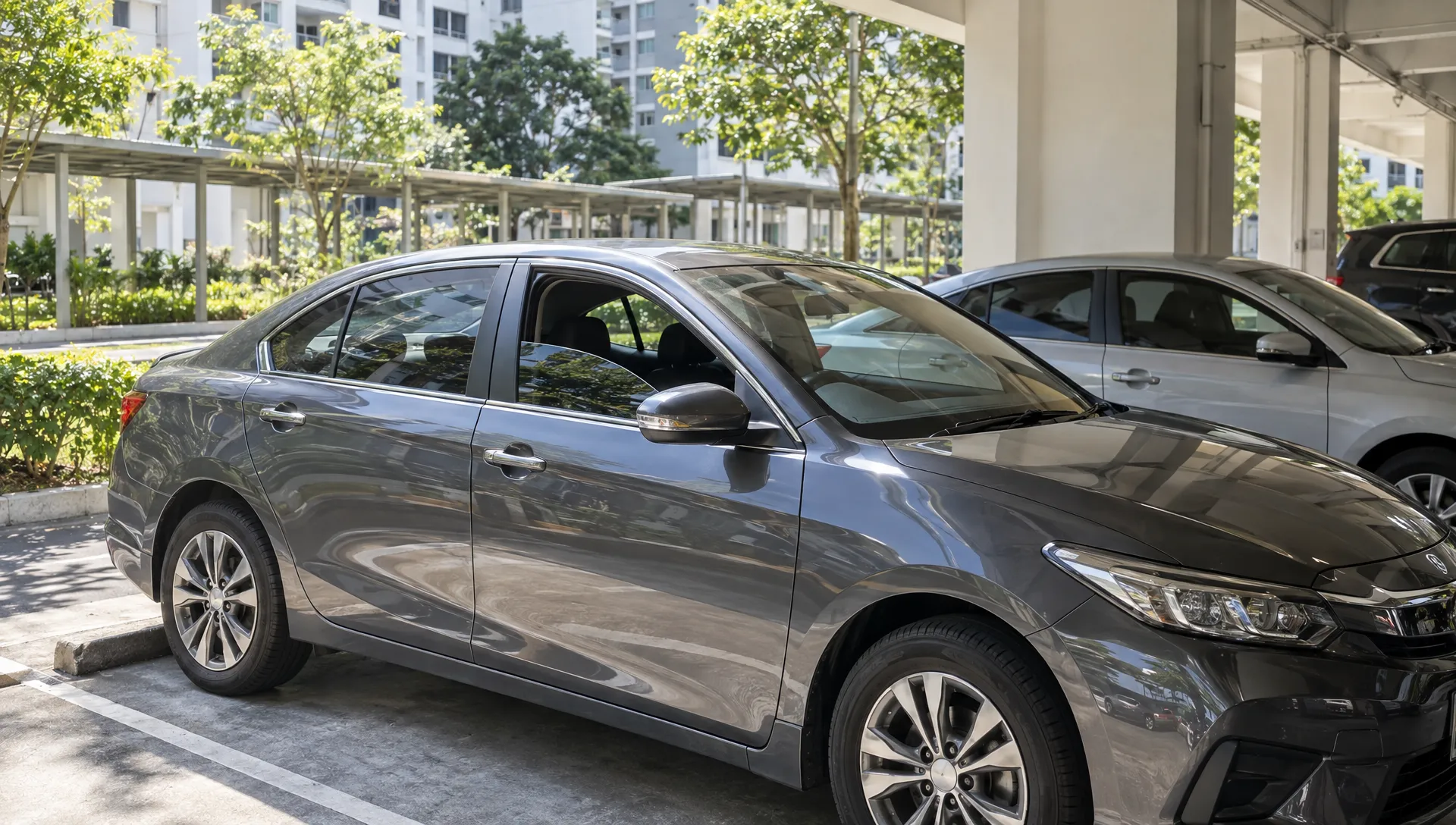
What Does Car Solar Film Cost in Singapore?
What Does Car Solar Film Cost in Singapore?
The cost of car solar film Singapore installers offer depends on the film specification, your vehicle and the installation work involved. Ceramic Works provides Solar Film for local car owners. This guide explains how much to budget, what can increase your bill and how to compare quotations without overlooking heat rejection, visibility or LTA requirements.
Car Solar Film Singapore: What Should You Budget?
For initial budgeting, allow approximately S$200 to S$1,500 or more for a full-car installation. Treat this as a broad planning estimate, not a verified market average or a Ceramic Works quotation. Your actual price needs to be confirmed against your vehicle and chosen film.
These budget bands can help organise your enquiries:
| Planning Budget | What To Check Before Comparing Offers |
|---|---|
| Around S$200 to S$500 | Exact window coverage, film specifications and installation warranty |
| Around S$500 to S$1,000 | Documented heat-rejection performance, optical clarity and warranty terms |
| Around S$1,000 to S$1,500 or more | What measurable performance, additional coverage or installation complexity justifies the premium |
Price alone does not establish film quality. A higher quotation should explain what you receive beyond a different product name.
Also confirm what “full car” means. A package may exclude a panoramic roof, old-film removal or particular glass panels. Ask whether the final amount includes GST, where applicable.
What Changes The Installed Price?
Vehicle Size And Window Coverage
A compact saloon and a large MPV can require different amounts of material and fitting time. Curved windscreens, large rear windows and roof glass can also affect the work involved.
When comparing car solar film Singapore workshops advertise, request a window-by-window coverage breakdown. A cheaper side-window package is not directly comparable with one that includes the front and rear windscreens.
Factory privacy glass does not necessarily provide the same heat-rejection performance as a specified solar film, so ask what additional benefit the proposed installation offers.
Film Technology And Measured Performance
Dyed, metal-containing and non-metallic ceramic films can have different performance characteristics. However, a technology label alone does not prove that a package deserves a higher price.
Compare the specifications that explain what you are buying:
- Total solar energy rejected (TSER): A broader measure of solar-energy rejection, useful when comparing results measured under equivalent conditions.
- Infrared rejection (IRR): Check the tested wavelength range, because a high figure at selected wavelengths does not describe all incoming solar energy.
- Visible light transmission (VLT): Shows how much visible light passes through, which matters for legality and visibility.
- UV rejection: Relevant to UV exposure, but not a substitute for heat-rejection data.
Ask whether published figures describe the film alone or a tested glass-and-film combination. Different test conditions can make headline percentages misleading.
Removal, Preparation And Workmanship
Replacing existing film can cost more than applying film to clean, untreated glass. Adhesive removal takes time, particularly around rear-window demister lines.
Installation quality also affects value. Contamination, creases, lifting edges and optical distortion can turn an apparently inexpensive package into repeat work.
Ask whether removal, preparation and any necessary refitting are included. For the warranty, confirm which problems are covered, whether labour is included and what exclusions apply. A long warranty is less useful if its conditions are unclear.
How LTA Compliance Affects Value
The cheapest car solar film Singapore installers quote is poor value if the finished windows do not meet legal requirements.
Under LTA’s window-tint requirements, the front windscreen and front side windows must allow at least 70% light transmission. The rear windscreen and rear side windows must allow at least 25%. Tinted glass must also meet the applicable non-reflectivity requirements. Confirm the current rules before installation.
These limits concern the finished glass-and-film combination, not simply the number printed on a film specification sheet.
As a simplified illustration, glass transmitting 80% of visible light combined with film transmitting 80% gives approximately:
0.80 × 0.80 = 64% combined transmission
That would fall below the front-window requirement. This calculation is illustrative; a suitable meter should verify the actual result.
Ask whether post-installation VLT checks are included in the quotation. Our guide to whether solar film for car windows is legal in Singapore explains the compliance considerations in more detail.
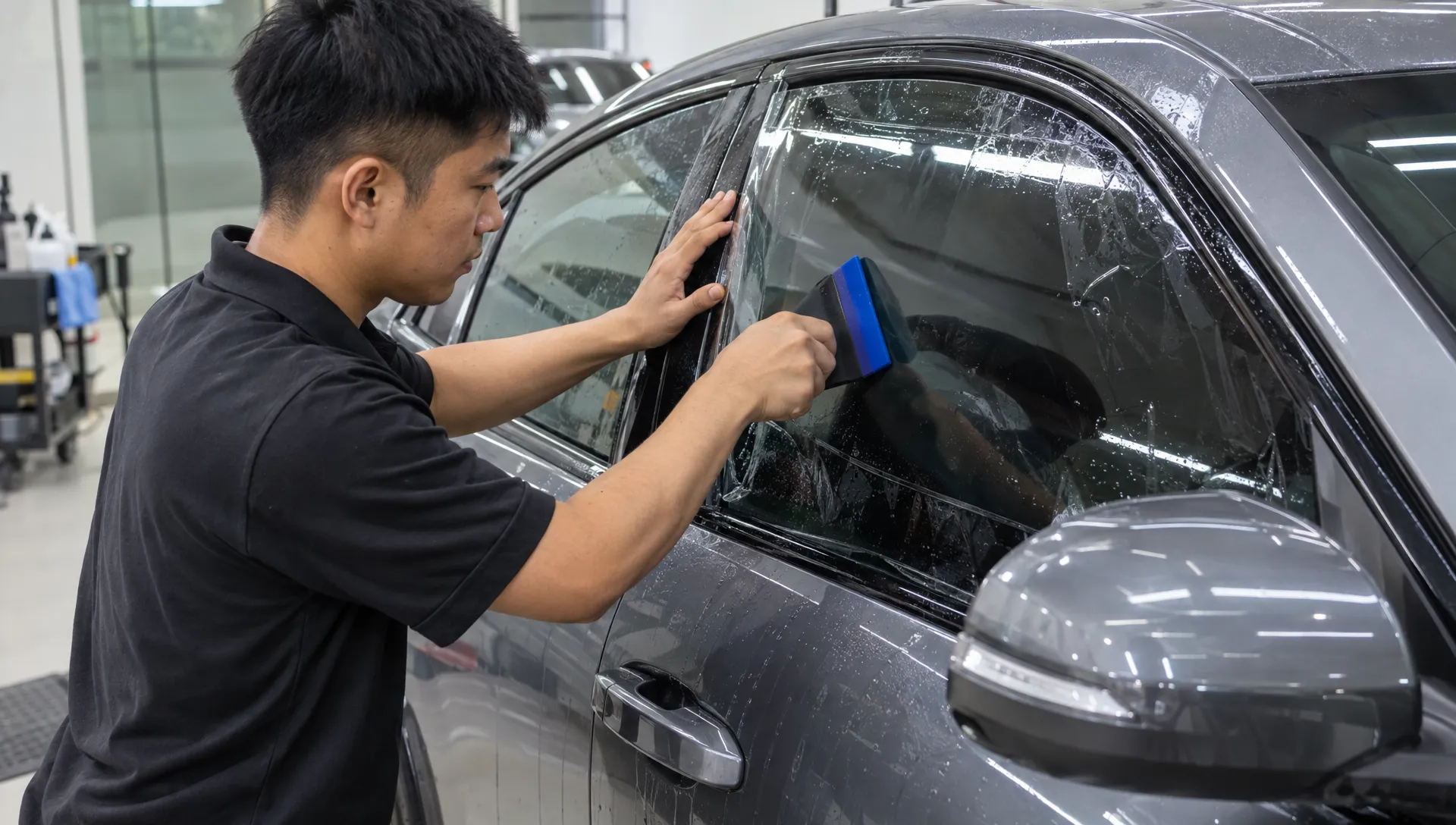
How To Compare Two Quotations Fairly
Compare car solar film Singapore providers offer using the same vehicle, window coverage and required visibility. Otherwise, the difference between two quotations may simply reflect different scopes of work.
Ask each installer to put these details in writing:
- Film identification: The exact range and specification proposed for each window group.
- Complete installed price: Coverage, removal charges, preparation and applicable taxes.
- Performance evidence: Comparable TSER, VLT and UV data rather than a single promotional percentage.
- Compliance checks: How the finished windows will be assessed.
- Warranty and handover: Coverage, exclusions, curing guidance and the process for reporting defects.
Next, consider how you use the car. Drivers who frequently travel after dark should pay particular attention to visibility when assessing shades. Darker film is not automatically better at rejecting heat.
Ask about compatibility with in-vehicle antennas, navigation and toll-payment equipment, especially when considering metal-containing films. The installer should also follow vehicle-specific requirements around cameras and sensors.
Finally, request clear aftercare instructions. Temporary installation moisture and a permanent defect are different issues, so establish when the film should be reviewed and when you should return for inspection.
Frequently Asked Questions
Is The Most Expensive Package Always Worth It?
No. The car solar film Singapore drivers choose should suit their driving conditions and budget. A premium is easier to justify when supported by comparable performance data, clear visibility, careful installation and meaningful warranty terms, rather than marketing claims alone.
Does Darker Film Reduce More Heat?
Not necessarily. Darkness mainly describes visible-light transmission. A relatively clear film can reject substantial solar energy, depending on its construction. Compare TSER under equivalent test conditions rather than judging heat rejection by appearance.
Can I Replace Only Some Windows?
Ask for a partial-installation quotation. Replacing only affected windows may reduce the immediate bill, but confirm shade matching, remaining film condition and the compliance of the completed installation. There is no fixed saving without assessing the vehicle.
Will Solar Film Keep A Parked Car Cool?
It can reduce incoming solar heat, but it cannot prevent a parked car from heating up indefinitely. Do not interpret heat-rejection claims as a guarantee of a particular cabin temperature or a replacement for air conditioning.
Choose Value, Not Just The Lowest Price
Start with a broad budget, then compare complete installed quotations. Window coverage, measurable performance, legal light transmission and workmanship matter more than an attractive starting price.
For help narrowing your options, use our guide to choosing solar window film for cars in Singapore. Then ask Ceramic Works for a quotation based on your vehicle model, existing film and preferred coverage, with inclusions confirmed before booking.